
If you build parts on a busy floor, you know this pain. The machine is “running,” but MES shows the job as “not started.” Or MES says “Rev B,” and the operator loads “Rev A.” Then you get a line stop, a pile of WIP, and a phone call nobody wants.
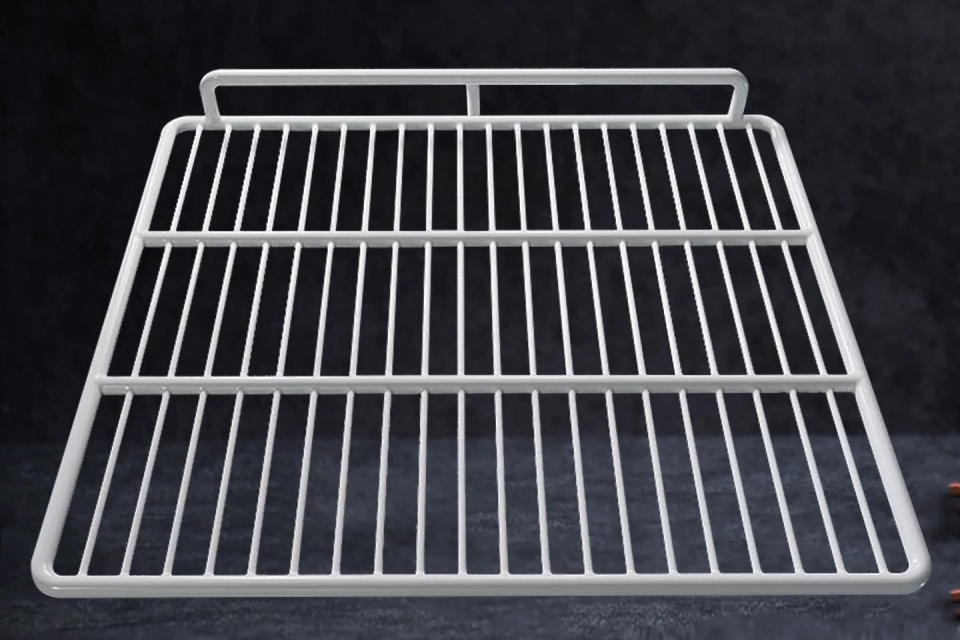
In custom wire shelving, that gap can bite hard. A rear wire shelving panel has to fit right and stay square. It also has to match the finish spec and airflow needs.
Same story for ice machine rear mesh. People expect durability, airflow, and the right fit for cooling equipment.
So let’s talk about how you keep machines and MES “speaking the same language,” without making your team suffer.
Table of Contents
ISA-95 / IEC 62264 data model
You can’t fix communication if you don’t agree on meaning. That’s the whole point of ISA-95 (also known as IEC 62264). It pushes you to define what a “work order,” “operation,” “resource,” and “status” means across systems.
On a wire shelving line, this shows up fast:
- Is the “part number” the customer SKU, or the internal drawing number?
- Does “complete” mean welded, or coated, or packed?
- Is “scrap” a bent wire, or a coating defect, or a wrong label?
If you don’t define that stuff, your integration becomes spaghetti. It looks fine until you add one more SKU, one more finish, or one more packaging rule. Then it breaks.
Work order, routing, and revision control
If you run OEM/ODM work, you deal with revision changes all the time. Your MES needs a clean way to push the latest routing and specs to the floor, and your machines need to pull the right “job recipe” every time.
QIAO positions itself as an OEM/ODM manufacturer that can build to spec, using advanced production lines and strict QC, with ISO 9001 claims on the site.

OPC UA interoperability
OPC UA is a common choice when you want machines from different vendors to share data in a standard way. In plain words: it helps you avoid building a custom driver for every new machine, forever.
Here’s what “good” looks like on the floor:
- MES sends job ID + part revision + target qty
- Machine replies with accepted / rejected (with a reason code)
- Machine streams status + alarms + counts while running
- MES records who ran it, what changed, and when
You don’t need fancy. You need consistent.
Information models and naming rules
This sounds boring, but it saves you. Pick a naming rule and stick to it:
Line01.Cell03.Welder.StatusLine01.Coating.Oven.TempLine01.Pack.LabelPrinter.Alarm
If you let every station invent names, you’ll hate your own dashboards two months later.
IPC-HERMES-9852 board transfer data
Hermes is an SMT standard, not a wire shelving standard. But the idea is still useful: pass the unit identity forward so each step doesn’t guess.
In your world, the “unit” isn’t a PCB. It’s a rack, a mesh panel, or a kit. The same idea applies:
- Give every unit a unique ID early
- Carry that ID through welding → finishing → inspection → packing
- Don’t re-scan and re-type the same thing five times (people will mess it up)
When you build rear wire shelving for refrigeration, that unit-level trace helps you prove “this lot used this finish, this jig, this inspection rule.”
IPC-2591 CFX messages
CFX is also SMT-focused, but it gives a clean pattern: event-based messages that MES can consume without constant polling.
Again, steal the pattern, not the industry label.
Instead of “MES asks every 3 seconds: are you running yet?”
Do “machine sends message: job started, job paused, job ended.”
That reduces noise, and it makes your timeline more honest.
MQTT Sparkplug publish/subscribe
If you run a lot of small events (sensors, counters, simple statuses), publish/subscribe can feel smoother than point-to-point calls.
Sparkplug adds discipline on top of MQTT so your data isn’t just random blobs. The practical value is this:
- A standard way to say “I’m online” (birth/death)
- A standard way to send metrics
- A cleaner way for MES, dashboards, and QA tools to subscribe
It’s not magic. But it can cut integration friction, especially when you add new stations.
Cybersecurity for OT/MES connectivity
Seamless doesn’t mean wide open. You want smooth data flow and sane security.
Keep it simple:
- Put machines on an OT network segment
- Use certificates or strong keys where you can
- Log who changed what (even if it feels annoying)
- Don’t allow “one shared password” for the whole shop… it always ends bad
A practical “signal to action” table
This is the part teams actually use. If MES sees a signal, what should happen next?
| Machine/MES signal | What it usually means | What you should do next (real shop action) |
|---|---|---|
| Job rejected (wrong revision) | Routing/spec mismatch | Block start, force re-load of latest job packet, notify planner |
| Repeated micro-stops | Minor jams, low air, loose sensor | Trigger quick check sheet; don’t wait for a full stop |
| Count drifting vs MES | Bad counter mapping or manual rework | Reconcile by unit ID; fix tag mapping before next shift |
| Finish line “ready” but MES “hold” | Quality gate not released | Stop packing; route to inspection; log disposition |
| High defect code “coating thin” | Process drift | Pause line, check coating settings, verify cure conditions |
Traceability fields that matter (and people forget)
| Data field | Why it matters for rear mesh / shelving | Example value format |
|---|---|---|
| Drawing revision | Stops wrong-bend or wrong size runs | REV-C |
| Wire diameter / gauge | Impacts load and stiffness | WD=xx (your internal code) |
| Weld program ID | Ties defects to a program change | WP-014 |
| Coating/finish code | Corrosion resistance, appearance | FIN-WHITE-VINYL |
| Inspection rule set | “Pass” means nothing without the rule | IQC-REAR-MESH-02 |
| Pack label template | Wrong labels cause returns | LBL-OEM-ICE-01 |
Where QIAO fits in the business story
Here’s the commercial truth. Customers don’t just buy wire racks. They buy reliability: stable quality, clean fit, repeat orders, fewer surprises.
Machine-to-MES communication is how you make that promise real, day after day.
One more thing: don’t aim for “perfect.” Aim for “works every shift.” If the data flow feels smooth, your operators trust it. If they trust it, they’ll actually use it… and that’s when the system starts paying you back.