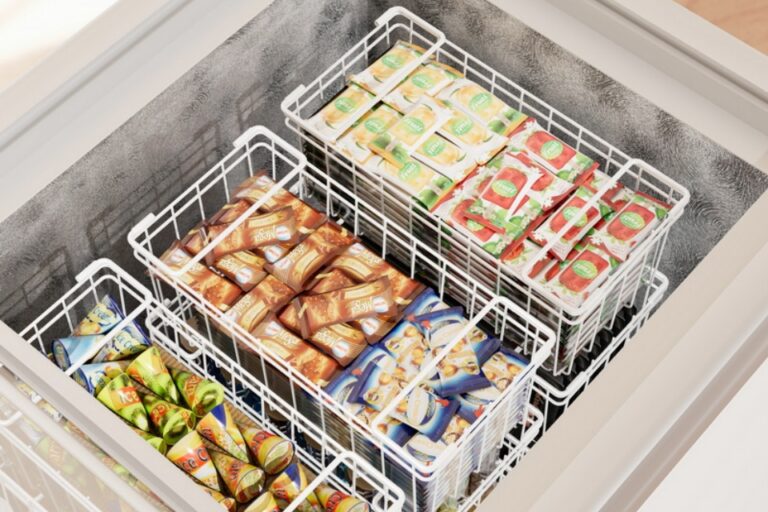

Si construyes componentes de vitrinas comerciales, drink holder anti-tip wire racks, or other metal parts that finally sit inside a fridge or a vending machine, you already know one thing: bad electronics kill a good cabinet.
Inline SPI and AOI to Improve First-Pass Yield
Most SMT defects start antes de reflow. Bad paste print, missing paste, offset, smearing. If you only look at the board after reflow, you already pay too much in rework and scrap.
Inline SPI sits right after the printer. Inline AOI sits after placement or reflow. Together they act like two hard gates:
- SPI: “Is the solder paste volume and position inside process window?”
- AOI: “Did we place the right part, in the right way, with a healthy solder joint?”
When both are inline:
- You catch paste problems in seconds, not hours.
- You stop feeding bad panels into expensive reflow.
- You push rendimiento en primera pasada (FPY) higher instead of just fixing defects later.
This kind of setup doesn’t look fancy on paper, but on a real line, you can feel it fast: less rework pile, smoother flow, operators less angry.
Closed-Loop Process Control With SPI and AOI Feedback
Good buyers don’t only ask, “Do you have SPI and AOI?” They ask, “Do they talk to the printer and the placement machine?”
When SPI and AOI are integrated in a closed loop, they don’t just show you defects. They adjust the process:
- SPI measures paste volume and offset.
- System sends feedback to printer: tweak alignment, adjust squeegee pressure, trigger stencil cleaning.
- AOI data can feed back to placement machines: fine-tune pick-and-place offsets, feeder setup, nozzle health.
On the dashboard you see:
- Live SPC charts for paste height and area.
- Early warnings when process drift begins.
- Trend lines by shift, by product, by work order.
This is the kind of “process discipline” that separates a basic shop from a serious OEM / ODM partner. When you tell your customer that your line runs with closed-loop SPI and AOI, it sounds a bit “engineer nerd”, but buyers in big chains actually like that.
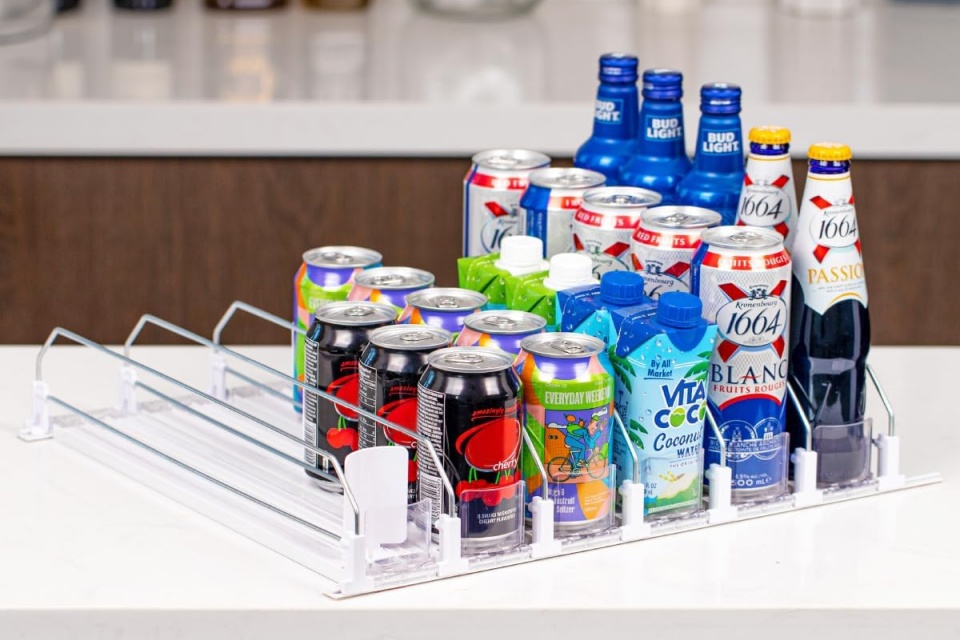
AOI and SPI Data for Smart Factory and Traceability
Inline AOI and SPI are not only cameras. They are data engines for your smart factory.
You can log, for every PCB:
- Paste volume per pad.
- Component presence, polarity, and solder joint status.
- Repair actions, operator ID, time stamp, even cabinet model.
Then you sync this with your MES or ERP. Now you can:
- Trace a failed controller in a supermarket back to exact lot, exact shift, even exact stencil.
- Prove to your beverage brand customer that boards for their componentes de vitrinas comerciales passed 100% inline inspection.
- See which product design has chronic DFM issues and push back politely.
For a wire shelving manufacturer like QIAO who also supports refrigeration units and componentes de cámaras frigoríficas, this kind of traceability is gold. When something goes wrong in the field, you don’t panic. You open the data, you show the story.
3D SPI and AOI With AI to Reduce False Calls
You probably heard operators complain: “AOI calls everything bad. I don’t trust it.” Too many false calls, and people just click pass without really checking.
Modern 3D SPI and 3D AOI with AI help a lot here:
- 3D SPI measures height, area, and volume of the paste, not just 2D gray image.
- 3D AOI looks at solder joint shape, wetting angle, and co-planarity.
- AI or machine learning models learn from your “golden boards” and your own pass/fail decisions.
Benefits you can expect (even if you don’t write them as exact numbers):
- Fewer false calls, so operator doesn’t waste half of their shift on “fake” defects.
- More stable programs when you run high-mix, small-lot jobs.
- Faster NPI bring-up, because the system auto-suggests inspection parameters.
Is it magic? No. You still need process engineers who know their job. But the inspection tool stop behave like crazy watchdog and become more like a calm, smart inspector.
Inline Inspection Architecture for High-Speed SMT Lines
Inline AOI and SPI really shine when your line speed goes up.
Imagine you build control PCBs for:
- Glass door fridges with componentes de vitrinas comerciales inside.
- Coffee machines with drink holder anti-tip wire racks so cups don’t fall.
- Small freezers in convenience stores using your custom wire shelving.
These are often medium to high volume projects. You can’t afford:
- To stop the line and carry boards to an offline machine every hour.
- To rely only on manual visual inspection at end of line.
- To let an entire bad lot pass because no one had time to check.
An inline architecture keeps the board on the conveyor:
- Printer → SPI → Placement → Reflow → AOI → Functional test → Packing.
- No extra handling.
- No extra fixture for every small change.
This kind of flow is also easier to balance. You match SPI and AOI cycle time to your line takt, so you don’t build a hidden bottleneck.
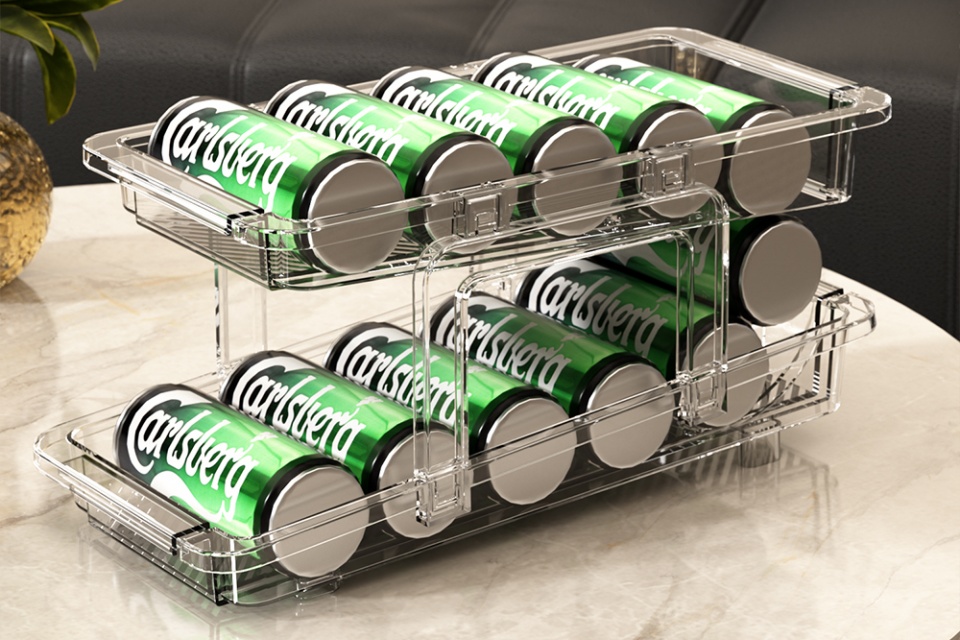
Quality Control for Commercial Display Cabinet Components and Drink Holder Anti-Tip Wire Rack
Now let’s link this back to what you actually sell.
Your website talks about:
- Custom wire shelving manufacturing services.
- Freezer components, componentes de vitrinas comerciales.
- Drink holder anti-tip wire racks for cold drink cabinets.
When a brand buys these parts from you, they don’t only buy metal. They buy a sistema:
- Shelves must support the weight of beverage bottles.
- Anti-tip wire racks must hold cups when door slams.
- LEDs, temperature controllers, fans, and small PCBs must work in cold, wet, sometimes dirty environments.
If your SMT line fails and boards die early:
- The fridge light goes off.
- Display cabinet doesn’t defrost correctly.
- Customer blames the complete cabinet, not just the PCB.
When you show them that your electronic modules come from lines with inline AOI and SPI integration, you send a clear message:
“We don’t ship random boards. We control paste, placement, soldering and we trace every panel.”
This is real commercial value, not just marketing noise.
Summary Table: What Inline AOI + SPI Give to a Buyer
| Quality lever | What inline SPI & AOI do | Impact you feel in the factory | Impact your customer sees |
|---|---|---|---|
| Paste quality control | SPI checks paste volume, height, offset after every print | Fewer blocked stencils, less reprint, smoother printer uptime | More stable solder joints, less early failure in field |
| Placement & solder joint check | AOI finds missing, wrong, twisted parts and weak joints | Smaller rework pile, less chasing “mystery defects” | Cabinets and coolers that power up clean with less DOA |
| Closed-loop control | Feedback from SPI/AOI auto-tunes printer and placement | Process drift gets caught early, not after one full shift | Stable quality across big orders and season peaks |
| Traceability & data | All defects and repairs logged per board and per work order | Faster root-cause analysis, easier audits | |
| Support for speed & miniaturization | Inline architecture keeps up with line takt even for tight pitch parts | No need to slow down line for inspection | On-time delivery without trading away quality |
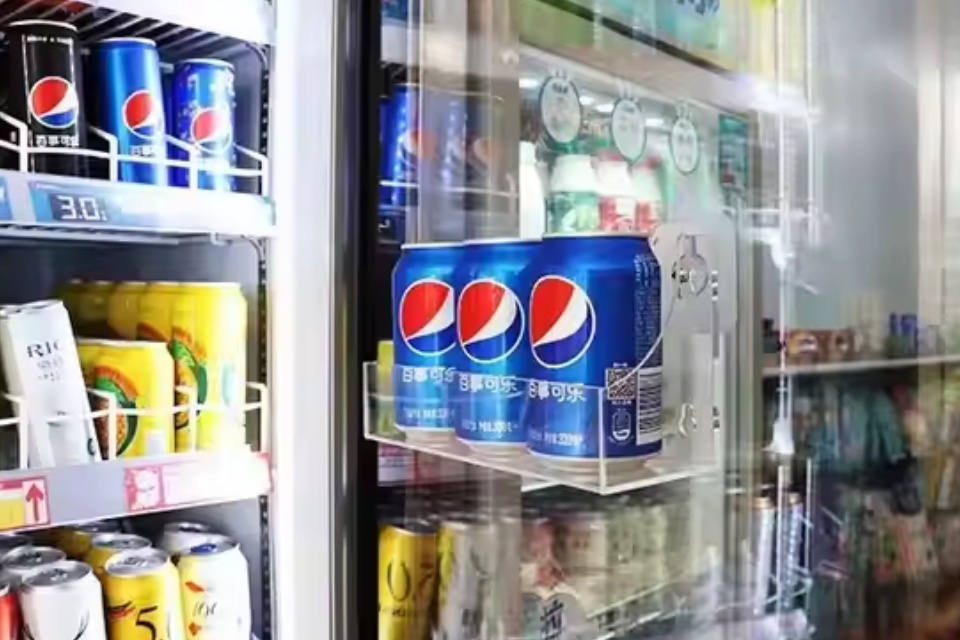
What You Should Ask When Buying Inline AOI and SPI
If you’re planning a new line or upgrade, don’t only look at brand and price. Ask a few “shop” questions:
- Can the SPI talk to the printer and your MES, or it just export pretty reports?
- Does AOI support 3D and polarity checks for the parts you really use?
- How easy is program tuning during NPI? Does it learn, or your engineer suffer every time?
- Can the system handle your mix of cabinet controller boards, LED drivers, and small power PCBs?
- Does the vendor understand that you run custom wire shelving manufacturing and componentes de unidades de refrigeración, not smartphone factory?
When you choose right, inline AOI and SPI integration become part of your daily routine. Not a toy, not a slide for marketing only. Just a quiet system that helps QIAO and your team ship reliable cabinets and racks, week after week.