Flux type can make or break reflow quality. Compare no-clean and water-soluble flux, learn why voids, spatter, and residue happen, and how to stabilize yields.
You can run a “perfect” reflow profile and still get ugly joints. Then you tweak peak temp by 3°C, and… nothing changes. That’s when flux starts to look less like a small detail and more like the steering wheel.
Flux isn’t just “sticky chemistry.” It controls wetting. It controls residue. It even controls how much gas you trap under the joint. If your SMT line feels moody, flux type is often the reason.
Let’s break it down in plain shop-floor terms, with real defects you see on AOI and X-ray.
Índice
IPC J-STD-004 Flux Classification In SMT Reflow
If you want your team (and suppliers) to speak the same language, use IPC J-STD-004 style terms. It helps you compare apples to apples.
ROL0 vs ROL1 vs ORH1 Meaning
Here’s a simple cheat sheet. Don’t treat it like magic labels. Still test in your process.
Label Pattern
What It Tells You
What You Usually Feel On The Line
RO / OR / IN
Base chemistry family (rosin/resin, organic, inorganic)
Changes residue “look,” cleaning behavior, and how “forgiving” wetting is
L / M / H
Activity level (Low / Medium / High)
Higher activity often wets easier, but can bring more residue risk
0 / 1
Halide content class (lower vs higher)
Impacts electrical reliability risk if residues stay on the board
You’ll hear people say “ROL0 is safe, ROL1 is risky.” That’s too simple. In real life, board finish, paste volume, atmosphere, and cleaning (or no cleaning) all pile on.
No-Clean Flux In Reflow Soldering Quality
No-clean is popular because it removes a whole cleaning step. Less equipment. Less handling. Faster flow.
But no-clean can also tighten your process window. If oxidation is heavy or your pads are not super fresh, no-clean sometimes struggles. You’ll see it as:
slow wetting
dull fillets
random non-wet opens on fine pitch
more sensitivity to stencil wear and paste age
No-Clean Flux Residue And Electrical Reliability
If you leave residues, you own the reliability story. That matters a lot when boards live in humid places or see condensation.
What can go wrong?
Residue can turn tacky again after moisture exposure.
Ionic contamination can support leakage or electrochemical migration on tight spacing.
You may pass AOI today, but fail in climate stress later. Not fun.
A practical approach is simple: if you go no-clean, build a validation routine (SIR style testing, ionic cleanliness checks, and humidity exposure on your worst-case assemblies). Do it before you ship volume.
Water-Soluble Flux Effects On Reflow Soldering
Water-soluble (often called OA flux systems) usually gives strong activation. Translation: it can wet like a champ. It’s helpful when:
pads oxidize fast
components sit longer in WIP
you run challenging finishes
you need “stronger bite” during reflow
But water-soluble assumes you will clean. If you don’t clean well, you can leave residues that are no meant to stay.
Flux Moisture Sensitivity And Solder Balling
Water-soluble systems can be more sensitive to moisture and handling. If paste sits open too long, or storage control isn’t tight, you may see:
solder balling near chip parts
splatter marks around joints
inconsistent tack during placement
more slump that messes with fine pitch
This is where line discipline matters. Control open time. Track paste roll-in/roll-out. Keep humidity in check. It sounds boring, but it saves your yield.
Flux Volatiles, Voiding, And Solder Joint Integrity
Voids aren’t only a “profile” problem. Flux chemistry plays a big role because flux generates gas during heating. If gas can’t escape, you trap it.
Voiding Mechanisms In Reflow Soldering
Common void drivers that connect to flux type and formulation:
fast solvent boil-off (gas spike early)
thick paste deposits (long path for gas to escape)
large thermal pads with limited vent paths
aggressive activation timing that changes wetting flow
So when you chase voids, don’t only tweak soak time. Also ask: Is this paste designed for low-void work? Some no-clean formulations focus on low voiding. Others don’t.
No-Clean Flux Spatter And Contamination Control
Spatter is the sneaky defect. You won’t always see it on AOI, but it can:
contaminate lenses and mirrors (SPI/AOI optics)
dirty conveyor rails
add random “dots” that confuse inspection
deposit residue where you don’t want it
Some flux types and chemistries spit more under certain ramp rates. If your oven looks like it’s “snowing” brown specks, don’t blame only the oven. Paste and flux chemistry may be the root.
Reflow Profile Interaction With Flux Activity
Flux doesn’t work in a vacuum. Your profile tells flux when to activate, how fast to evaporate, and how long residues cook.
Ramp Rate, Soak, And Flux Activation Window
General shop-floor pattern (not a law, just what you often see):
Too fast ramp → more spatter risk, more paste disturbance, sometimes more solder balls.
Too long soak → can over-dry paste, change wetting timing, and leave uglier residues.
Too short TAL (time above liquidus) → weak coalescence, incomplete wetting on tough pads.
Your goal is a “boring” profile. Boring is good. Boring makes quality stable.
Nitrogen Reflow And Flux Requirements
Nitrogen can reduce oxidation during reflow. That can let you run lower-activity flux and still get solid wetting. But nitrogen isn’t a free lunch. If you switch atmosphere, re-check:
residue appearance
voiding trend
wetting speed and fillet shape
Also, nitrogen won’t fix bad paste storage or a stencil that’s seen better days.
Defect Map: What You See vs What Flux Type Often Drives
Use this table during daily standup. It’s quick, and it points your troubleshooting in the right direction.
Defect Symptom
Flux-Related Cause You Should Suspect
Fast Checks On The Line
Non-wet open / weak fillet
Low activity for the oxidation level, or flux “spent” from long open time
Check paste age, open time log, pad finish condition
Bolas de soldadura
Moisture sensitivity, slump, too aggressive evaporation
Residue not designed for your profile or atmosphere
Adjust soak, confirm no-clean expectations, run cleanliness test
Small note: you might fix one defect and wake up another. That’s normal. Flux is a trade-off game.
Fan Grill Guard In Reflow Oven Airflow And Process Stability
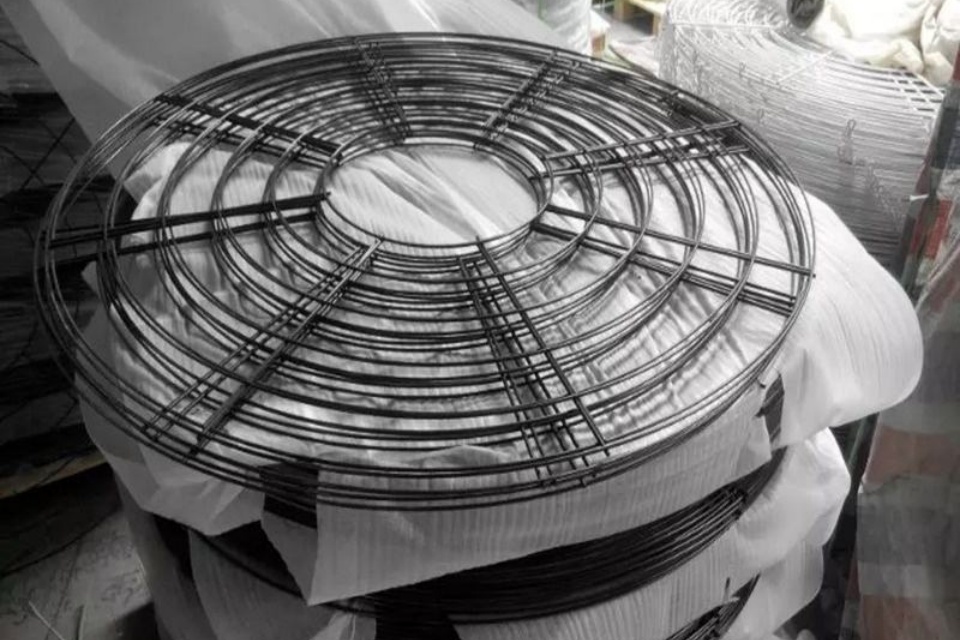
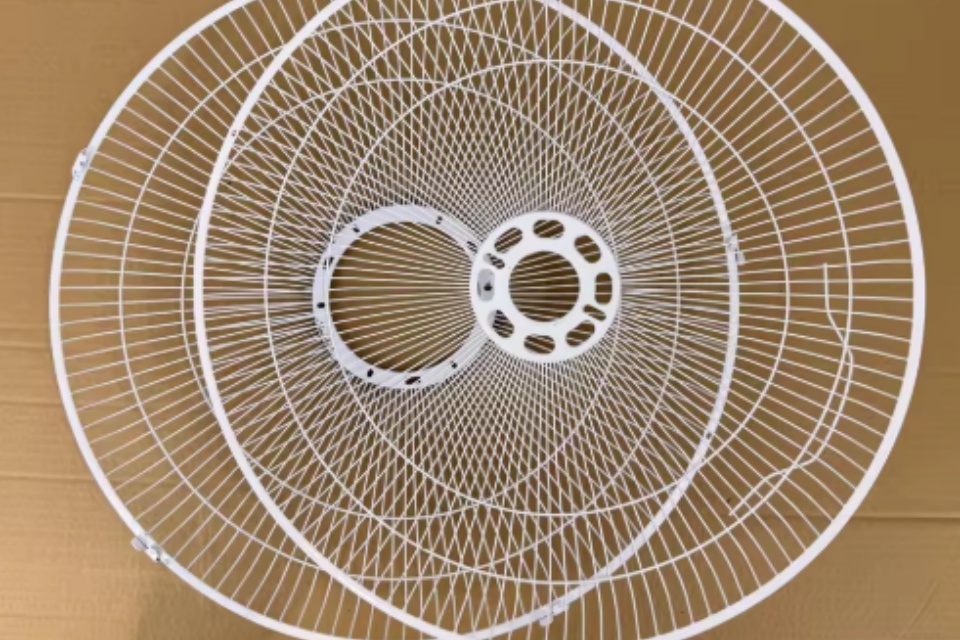
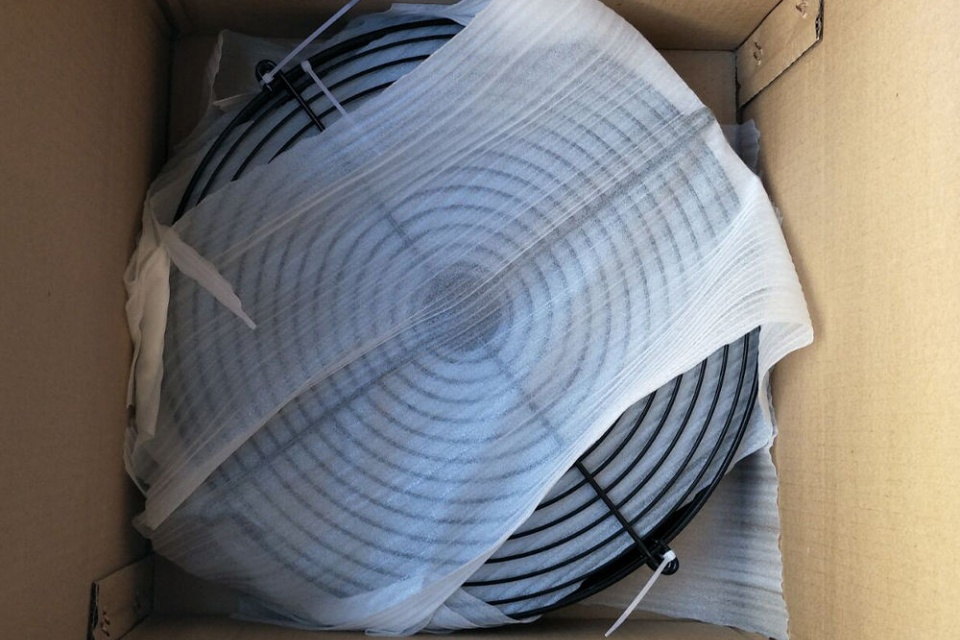
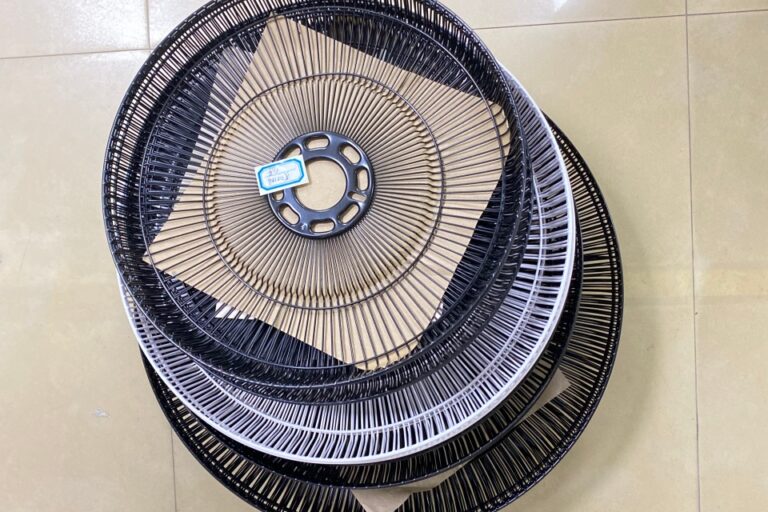
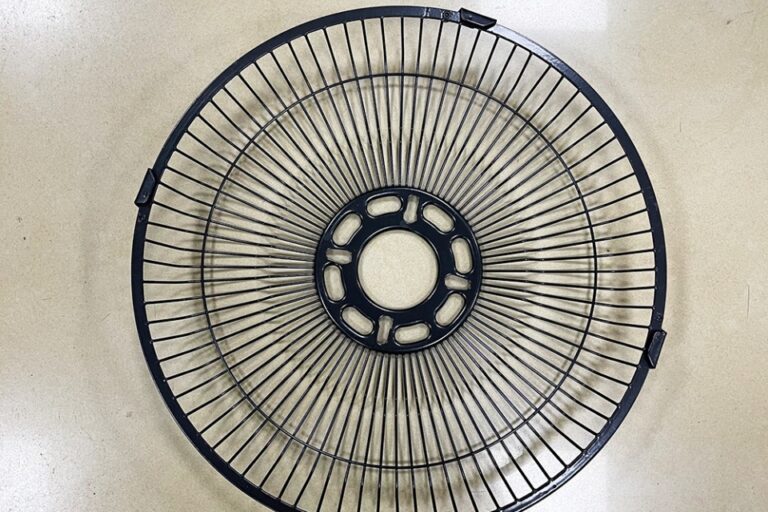
Now let’s connect this to your business and your product category: Rejilla de protección del ventilador.
Reflow ovens rely on stable airflow. Fans push heated air in zones. Exhaust fans pull volatiles out. If airflow drifts, flux behavior drifts too. Then wetting shifts, spatter shifts, voiding shifts. You get the idea.
If you build or service reflow ovens, wave machines, or any forced-air heating equipment, a well-made wire guard is a simple part that prevents bigger downtime.
A lot of SMT factories also buy Malla trasera, cabinet components, and componentes de cámaras frigoríficas. They want one supplier that can build wire parts fast, with stable finish quality, and ship global.
“When we build wire parts for factories—like fan grill guard styles—QIAO focuses on consistent dimensions and durable finishes, so your equipment stays stable instead of drifting.”
(Also, small real talk: if your guard fit is off by even a bit, techs will bend it, install it wrong, or skip it. Then you’re back to broken fans and messy airflow. So build it right.)
Closing Thought: Choose Flux Like You Choose A Process Partner
Flux type isn’t a checkbox. It’s a process decision. No-clean can simplify your flow, but it can demand tighter control. Water-soluble can wet fast, but it expects strong cleaning discipline. And voiding/spatter can swing hard with chemistry changes.
If you want fewer surprises, do this:
lock paste handling rules (open time, storage, mix method)
tune profile to the flux activation window
validate residues in humidity, not just at room temp
keep airflow stable (and protect fans with the right guards)
Do that, and your reflow line stops feeling “random.” It starts to behave. Even if, sometimes, it still act a little weird — like any factory does.
Fabricante de estanterías de alambre personalizadas con una cantidad mínima de piezas (50 juegos). Pedidos flexibles de OEM y distribuidores, estanterías de resistencia industrial adaptadas a sus especificaciones.
Ciclo de entrega y asistencia
Producción rápida y envíos a todo el mundo. Asistencia 24/7, logística fiable para refrigeración, componentes de congeladores y estanterías de alambre para bebidas en todo el mundo.
Calidad y certificaciones
Proveedor de estanterías con certificación ISO 9001, NSF y CE. Un riguroso control de calidad garantiza la durabilidad de las estanterías industriales de alambre y las estanterías para bebidas en todo el mundo.