
Static problems don’t always show up like a big zap. Most days it looks like this: random defects, parts that “jump” on the nozzle, dust sticking to boards, or a line that feels cursed after lunch.
If you run an SMT line or an electronics workcell, you’ve got two tools that fix a lot of this fast:
- ESD ionizing air blowers (to neutralize charge on insulators)
- Antistatic carts (to move WIP without turning your cart into a rolling charge generator)
This guide keeps it practical. It’s written for real shop floors, not a lab.
And yes—if you need a cart that actually fits your aisle, your bins, your torque tools, your kitting flow… that’s where a custom build helps. (More on that later with WireShelvingMFG.)
Table des matières
ESD control basics in an EPA
Most lines run an EPA (ESD Protected Area). The idea is simple:
- Ground the people
- Ground the tools and surfaces
- Control charge on insulators
- Verify it, on a schedule
Here’s the catch: grounding works great for conductors. But insulators don’t “drain” charge the same way. That’s why ionization exists. It’s not fancy. It’s just the missing piece.
Ionizing air blower: decay time and ion balance
If you only remember two spec words, make it these:
- Decay time: how fast it knocks voltage down.
- Ion balance (offset): how “even” the positive and negative ions are.
A blower that neutralizes fast but drifts off-balance can cause weird issues. Not always, but you don’t want that surprise at 2 a.m.
ANSI/ESD STM3.1 test data
When vendors say “it’s fast,” ask: fast per what test?
Many suppliers publish ionizer performance using ANSI/ESD STM3.1 style reporting (decay + balance). You don’t need to argue standards in meetings. Just put it in your RFQ: “Provide decay time and ion balance test data.”
Real line-side scenarios for ionizing blowers
Use ionizers where you see these headaches:
- Tape-and-reel peeling creates charge on cover tape (classic).
- Plastic trays and bags hold charge (even “antistatic” ones can still charge up).
- Hand work at rework benches (wrist strap helps, but the board still sees charged plastic tools nearby).
- Dust attraction on conformal coat or adhesive stations (dust loves static, like, a lot).
If you’re thinking “we already grounded everything,” cool… but the charge often comes from the stuff you can’t ground.

Ionizing air blower: placement, airflow, and maintenance
Ionizers fail in a boring way: they still blow air, but they stop neutralizing well.
Ionizer placement distance and airflow pattern
Common mistakes I see:
- You mount the blower too far away, so ions never reach the target.
- You point it across the bench instead of at the charge source.
- You create turbulence that pushes parts around (then ops turn it off… and forget).
Put it where it works with your motion. Think: peel point, pick point, inspection point, bag open point.
Emitter cleaning and filter checks
This part is not sexy, but it matters:
- Dirty emitters reduce output.
- Filters clog.
- Balance drifts.
So when you buy, ask: How do we clean it? How often? Does it have a balance alarm? Do we need special tools?
If the answer is vague, that’s a sign.
Antistatic carts: resistance to ground (Rg) and grounding path
An antistatic cart isn’t “just a cart.” It’s a mobile ESD surface.
If the cart body is good but the casters are insulating, you get a rolling static generator. That’s a classic oops.
IEC 61340-5-1 resistance targets for mobile equipment
Many ESD programs use limits around 10⁹ Ω to ground for worksurfaces and mobile storage (your exact internal spec may vary). The real point: you need a controlled path to ground, not “random metal floating.”
Conductive casters and drag chain options
Cherchez :
- ESD casters rated for dissipative performance
- A consistent connection from shelf → frame → caster → floor
- Optional ground drag chain if your floor finish needs it
Also, don’t ignore floor reality. Some floors are basically ice (low friction, high gloss). Your caster choice affects safety and ESD at the same time.
ESD cart materials: conductive vs dissipative surfaces
Use the right surface type for the job:
- Conductive: drains fast, can be too aggressive in some contexts.
- Dissipative: controlled drain, common for handling electronics.
- Insulative: avoid for EPA carts (unless it’s a non-contact component).
Also watch for tribocharging (that’s the fancy word for “rubbing builds charge”). Some plastics charge like crazy. That’s why cart top mats, bin liners, and handles matter.
Buying checklist table: ionizing air blowers
| Ce qu'il faut vérifier | Pourquoi c'est important | What to ask the vendor |
|---|---|---|
| Decay time | Tells you how fast neutralization happens | “Provide decay time test data (method + distance).” |
| Ion balance (offset) | Helps avoid drifting charge bias | “What’s the balance spec, and how do we verify it?” |
| Coverage and airflow | Determines if ions reach the real target | “Show recommended mounting distance and coverage map.” |
| Filter/cleaning plan | Prevents slow performance drop | “How do we clean emitters, and what’s the interval?” |
| Alarms / status lights | Reduces silent failures | “Does it alert when balance is out or output is low?” |
| Noise and air speed | Operators will turn loud units off | “What’s dBA and air velocity at working distance?” |
(Notice I didn’t talk price. A cheap unit that gets disabled is not cheap, ok.)
Buying checklist table: antistatic carts (and wire shelving carts)
| Ce qu'il faut vérifier | Pourquoi c'est important | What to specify |
|---|---|---|
| Rg to ground (target range) | Confirms controlled discharge | “Cart system meets EPA Rg target; provide test method.” |
| Grounding path continuity | Prevents floating metal | “Frame-to-caster continuity verified.” |
| Caster type | Impacts ESD + safety | “ESD dissipative casters; include floor compatibility.” |
| Shelf surface + edge handling | Touch points create charge | “Dissipative contact surfaces; avoid high-charge plastics.” |
| Load + stability | A shaky cart causes damage | “Rated load per shelf, tip resistance, bracing.” |
| Corrosion-resistant finish | Cleaning and humidity happen | “Finish supports washdown / humidity (as needed).” |
Customized Products: why custom carts win in real production
Off-the-shelf carts are fine… until you run actual flow:
- Kitting needs exact bin spacing.
- WIP trays need rails, not flat wire.
- You want a top shelf for scanner + label printer.
- You need a side hook for torque driver or feeder tools.
- You need the cart to fit a narrow aisle without playing bumper cars.
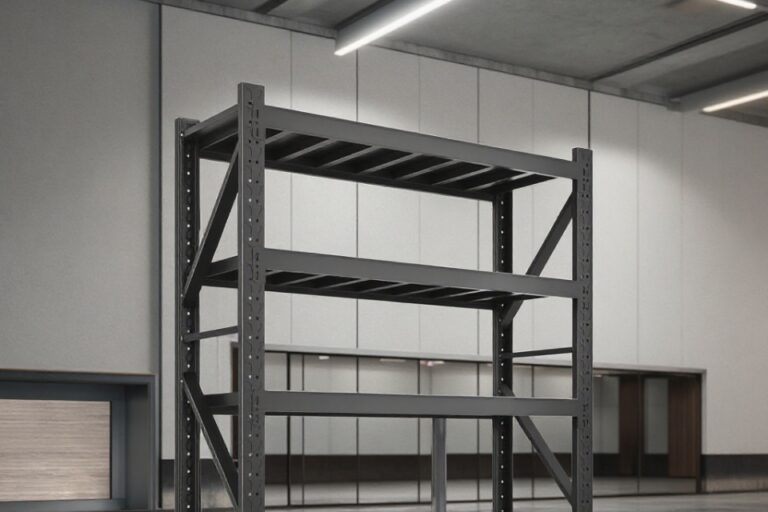
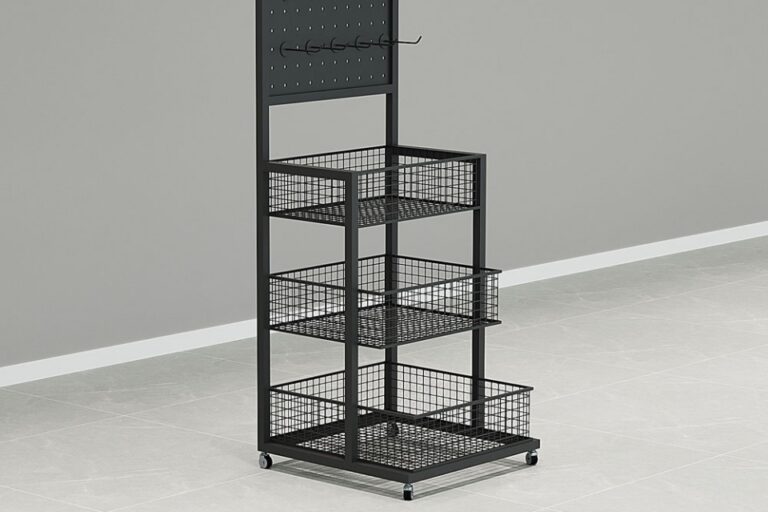
C'est là que custom ODM/OEM wire shelving makes sense. You can start with a sketch or a “please copy this but better” photo. Then a manufacturer turns it into a cart that matches your line.
If you want to see how we handle that kind of build, check Produits personnalisés and how the team at WireShelvingMFG supports custom wire shelving manufacturing services (OEM/ODM, corrosion-resistant finishes, ISO quality, global shipping).
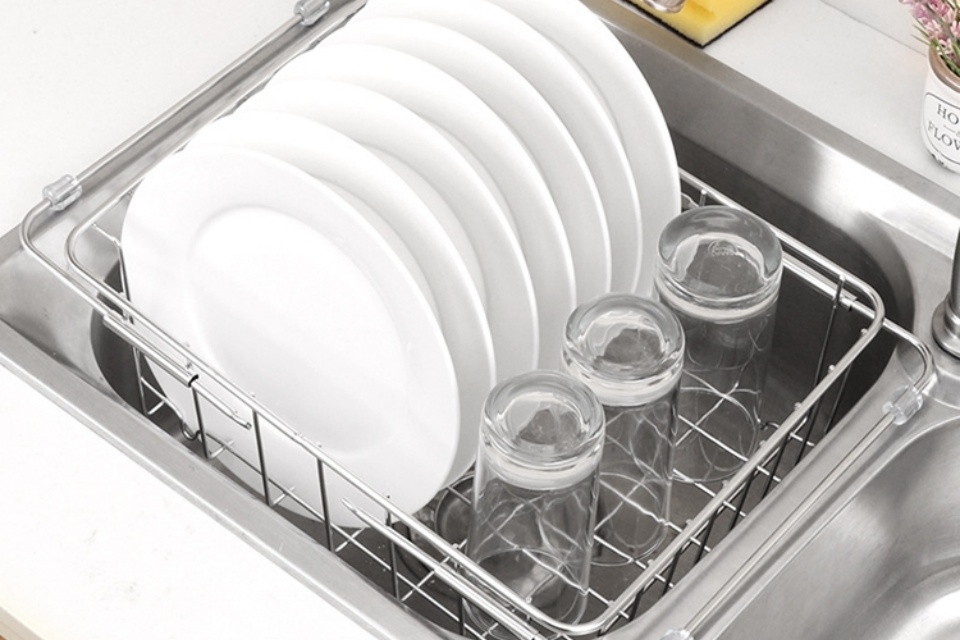
Dishwasher Wire Shelving: a good clue for harsh cleaning needs
Some electronics shops clean carts and racks more than people think—flux dust, adhesive drips, general grime. If your process includes regular cleaning, you should care about finish quality and corrosion resistance.
A good reference point is Lave-vaisselle Étagères en fil métallique. Different industry, same reality: moisture + chemicals + cycles of abuse. If a shelf survives that world, it usually means the finishing know-how is real (not magic, just good process control).
Quick “don’t do this” list (learned the hard way)
- Don’t mount an ionizer where it fights the HVAC vent. It’ll lose.
- Don’t buy a cart with “ESD” label but no grounding story. Label don’t equal performance.
- Don’t ignore maintenance. Dirty emitters = fake protection.
- Don’t let operators hate the blower. If it’s loud or blows parts, it’ll get switched off… maybe forever.
Wrap-up: the simple buying plan
If you want fewer surprises:
- Put ionizers where insulators charge up (peel, bag open, rework).
- Buy ionizers based on decay time + ion balance, not vibes.
- Build carts with a real grounding path, not “metal somewhere.”
- If your flow is special (it is), spec a custom cart that matches it.
If you’re ready to build carts that fit your workcells—and look clean doing it—WireShelvingMFG can support that through OEM/ODM custom wire shelving manufacturing services.