How To Choose The Right Reflow Oven For Leaded Vs Lead-Free Soldering
This blog shows how to pick one reflow oven for both leaded and lead-free soldering. Learn key specs, profiles and checks to keep your SMT line stable and safe.
You stand in front of two spec sheets. One job is still leaded solder. The next big customer wants RoHS lead-free.
And you only want one reflow oven, not two monsters eating floor space and power.
Let’s walk through how to pick a reflow oven that can run both leaded and lead-free, without turning your SMT line into a daily fire-fighting show.
Table of Contents
Leaded vs Lead-Free Solder Alloys and Reflow Temperature
First thing, forget the brand names for a moment. Think about the metal and the heat.
Typical leaded paste: Sn63/Pb37, melts around 183 °C.
Typical lead-free paste: SAC305, melts around 217–219 °C.
To get good wetting, your peak temperature must sit above the melting point:
Item
Leaded Solder (SnPb)
Lead-Free Solder (SAC305)
Comment
Melting point (approx.)
~183 °C
~217–219 °C
Lead-free needs higher heat
Typical peak temp range
210–220 °C
240–250 °C
20–30 °C higher for lead-free
Time above liquidus (TAL)
30–60 s
30–60 s
Window is similar
Preheat range
~120–150 °C
~150–190 °C
Lead-free wants a warmer start
Thermal stress on parts
Lower
Higher
PCB and plastic feel more pain
You can see the pattern:
If the oven can’t comfortably run a clean lead-free profile, it will always feel weak, even for leaded.
So you choose the reflow oven by the harder job: lead-free.
Key Reflow Oven Features for Leaded and Lead-Free Profiles
Maximum Temperature and Temperature Stability
For mixed production, the oven should:
Reach at least 260 °C peak in the soldering zone with some headroom.
Hold a stable profile so the board temperature difference stays small, not jumping all over.
If your oven barely hits 245 °C when it’s new, in one year with dust, filters, half-blocked fans, it may not reach enough heat for tight lead-free work. Then operators start “tuning by feeling” and line quality go down.
You want the oven that still feel relaxed at lead-free peak.
Heating Zones and Conveyor Speed
More zones = more control.
For serious lead-free:
Aim for 7–10 heating zones for volume production.
Make sure conveyor speed has a wide adjustable range, so you can tune profile for thin boards, thick copper, big heat sinks, whatever the customer sends.
With too few zones, you are always making compromise:
If you fix the profile for a big, heavy board, the small controller board for a refrigeration system may overheat.
If you fix for the small board, your big board comes out with cold joints and dull lead-free fillets.
In real life, your NPI engineer don’t have time to fight the oven every time a new project comes.
Nitrogen Reflow Capability for Lead-Free Soldering
Lead-free solder oxidizes more. That’s why many factories talk a lot about nitrogen reflow:
Nitrogen can improve wetting for fine-pitch QFP, BGA, QFN.
It can reduce solder balling and random bridges on tight pads.
But nitrogen is not free. Gas cost + maintenance are real. Many plants use a simple strategy:
Consumer products, standard pitch → air reflow is OK.
Automotive, medical, cold-chain control boards → nitrogen on critical lines.
So when you look at a reflow oven, ask:
Is nitrogen an option if your customer pushes for AEC-Q or similar level?
Can you turn it on only when a specific product really need it?
Cooling Zone Design and Warpage Control
For lead-free, peak is high. Cooling matters a lot:
Too fast: PCB warps, BGA and connectors suffer stress.
Too slow: grain structure of solder not ideal, and line throughput drop.
Look for:
Separate cooling zones with adjustable fans.
Smooth cooling slope, not just “full blast” after a hot tunnel.
Option to use carriers or pallets for long boards.
If you build electronics that work together with refrigeration units components and metal frames, you often mount heavy relays, big terminals, and connectors on your PCB. Those guys love to twist the board if cooling is crazy. A decent cooling section will save you many mystery failures later.
Real Factory Scenarios: One Reflow Oven, Two Solder Types
Scenario 1: Legacy Leaded Job + New Lead-Free Customer
This is common:
Old domestic client still uses SnPb.
New export customer forces RoHS lead-free on the same SMT line.
What you need from the oven:
Preset recipes
One profile for leaded, another for lead-free.
Operators pick from menu instead of doing “hand-feeling engineering” every batch.
Good thermal uniformity When you switch from a small control PCB to a bigger power board, you don’t want to redo everything from zero.
Clean handling rules
Clear rules for which line, which stencil, which paste is leaded or lead-free.
No cross-contamination, especially on your export jobs.
Your SMT line looks stable, and quality guys stop shouting.
Scenario 2: Cold-Chain and Refrigeration Electronics
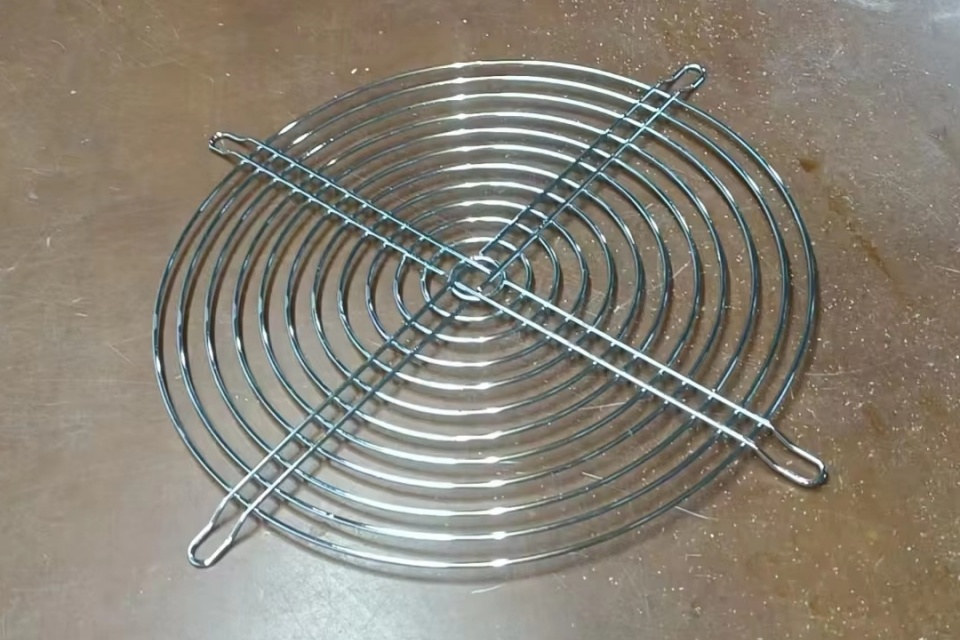
Let’s say your factory also builds fan grill guard and other metal parts for cold rooms, and you integrate control PCBs for those systems.
Now:
The board sees condensation, vibration, temperature cycling.
You may have big fan connectors and triacs/MOSFETs for compressor control.
Here the reflow oven plays a “silent” but very important role:
Lead-free joints must survive thousands of on/off cycles.
No cold joint on a fan driver, or your nice fan guard protect nothing because the fan doesn’t even start.
In this kind of project, many buyers talk with phrases like:
“We need rock-solid field reliability, not beauty only.”
“Line must be stable, no drama in peak season.”
So they ask your team about:
Reflow profile records
SPC charts
How you verify lead-free process window
If your oven supports easy data logging and traceability, your sales team can show them real curves instead of just saying “our quality is very good la”.
Simple Checklist for Choosing a Reflow Oven
When you sit with the oven supplier, keep this small list next to you. If most answers are “yes”, you are on the right track.
Reflow Oven Buying Checklist for Leaded and Lead-Free
Can the reflow oven run a stable lead-free peak (around 240–250 °C) with margin?
Does it offer 7 or more heating zones, so you can tune different board designs?
Is there an option for nitrogen reflow for high-reliability jobs later?
Does the cooling section allow controlled cooling rate to reduce warpage?
Can the system store multiple profiles (Leaded / Lead-Free / NPI) and lock parameters?
Is it easy to plug in a profiler and capture real temperature curves for customers?
Does the supplier give process support, not only a machine and a PDF manual?
If the answer is “no” many times, don’t expect the line to magically run smooth when you mix leaded, lead-free, samples, rush orders… life will be more hard.