
You’re not buying “a pick-and-place machine.” You’re buying a whole line that has to run Monday morning, with real boards, real operators, and real pressure. And if you don’t line up the OEM early, you’ll end up with a Franken-line. It kind of runs, but it never feels stable.
目次
OEM scope definition for SMT line customization
Start with scope. Not hardware.
When people say “OEM,” they often mean the big machine brand. In SMT line customization, OEM scope is wider. It includes:
- Board transfer and line control
- Program creation and version control
- Data collection and traceability
- Maintenance plan, spares, and training
- Ramp plan (NPI → pilot → mass)
Here’s the truth: if you don’t define who owns what, you’ll get gaps. Those gaps become downtime.
Practical tip: write a one-page “ownership map.” Keep it simple. “Who configures barcode rules?” “Who sets downtime reason codes?” “Who updates recipes when BOM changes?” If you can’t answer in one sentence, you’ve found a risk.
Hermes, SMEMA, and IPC-CFX interface planning
Mixed-brand lines are normal. So you need a clean handshake between machines, plus a clean data path up to your systems.
Board transfer handshake with Hermes and SMEMA
If you’re running modern equipment, you’ll hear about ヘルメス for board transfer communication. If you have older gear, you’ll still hear SMEMA. You don’t have to panic. You just need a plan:
- What standard do we use on each interface?
- Where do we convert (if we must)?
- Who tests every handoff under load?
Don’t accept “it supports it” as proof. Ask for a demo with your panel size, your cycle time, and your worst-case queue.
Line data using IPC-CFX
A custom line isn’t only about moving PCBs. It’s also about moving information. If you want quick root-cause work, you need structured data from each process step.
Set expectations like:
- Which events get reported (start/stop, alarms, recipe load, barcode read)?
- What’s the “unit” (board, panel, serial, batch)?
- How do we time-sync all machines?
If the OEM says, “We can export a CSV,” that’s not a system. That’s a cry for help.

Process preparation: BOM validation, stencil, programming, and line balancing
Customization breaks down fast when engineering data gets messy.
Your OEM collaboration should cover these items as one connected flow:
- BOM validation (part numbers, alternates, MSL, package data)
- Stencil plan (aperture logic, reductions, step stencil needs)
- Placement program (feeder mapping, nozzle choices, pickup checks)
- Line balancing (bottleneck station, buffer sizing, changeover plan)
- Work instructions (visual aids, torque specs, ESD notes)
Here’s a real-world scene: you change one capacitor vendor. Same value, different package height. The printer is fine. Placement starts dropping parts. AOI starts flagging shifts. People argue for two days. This is why you lock down package data and revision rules with the OEM up front.
Also, agree on a “golden build.” One golden board run, fully documented. Same recipe, same feeders, same settings. When things go weird later, you can compare to something real, not “I think it was better last month.”
Traceability requirements using IPC-1782 thinking
Traceability sounds boring until you need it. Then it becomes your best friend.
Don’t start with “trace everything.” Start with risk and need:
- Do you need component-level trace, or process-step trace?
- Do you need lot codes for passives, or only for critical parts?
- How long do you keep data?
- Who can access it, and how do you protect it?
Keep the dataset small at first. But make it consistent.
A solid “minimum trace pack” often includes:
- Unit ID (barcode/serial)
- Recipe version
- Key process results (SPI/AOI pass/fail + defect codes)
- Rework actions (what changed, who did it)
- Material lot for critical items
If your OEM can’t align with this, your “smart factory” dream turns into tribal knowledge. And tribal knowledge quits on Friday.
FAT and SAT for customized SMT production lines
Custom lines need testable promises. That’s what FAT and SAT are for.
Factory Acceptance Test (FAT)
FAT happens at the OEM site (or before shipment). You check:
- Safety and interlocks
- Cycle time capability (under realistic load)
- Recipe handling and versioning
- Alarm behavior and stop logic
- Data outputs (events, IDs, timestamps)
Site Acceptance Test (SAT)
SAT happens at your plant. You confirm:
- Utilities and layout fit
- Full line integration works in your environment
- Operators can run changeovers
- Maintenance can do recovery fast
One small rule: write pass/fail criteria like a checklist, not like a story. If you can’t measure it, you can’t accept it.

OEE alignment and downtime reason codes
If you want fewer arguments, use shared metrics. OEE is common because it forces one language:
- Availability: did you run when you planned to run?
- Performance: did you run at the planned rate?
- 品質: did you make good units?
You don’t need perfect OEE math on day one. You do need shared definitions.
SMT line support equipment and facility “little stuff” that blocks big goals
Now let’s talk about the stuff people forget. This part hurts, because it’s so normal.
SMT lines don’t live in a vacuum. You need line-side storage, protection, and handling that keeps flow smooth:
- ESD-safe staging areas
- Kitting and replenishment zones
- Guards and mesh where equipment needs airflow protection
- 冷蔵 setups for materials (like solder paste) in some factories
This is where your manufacturing partner matters. A lot.
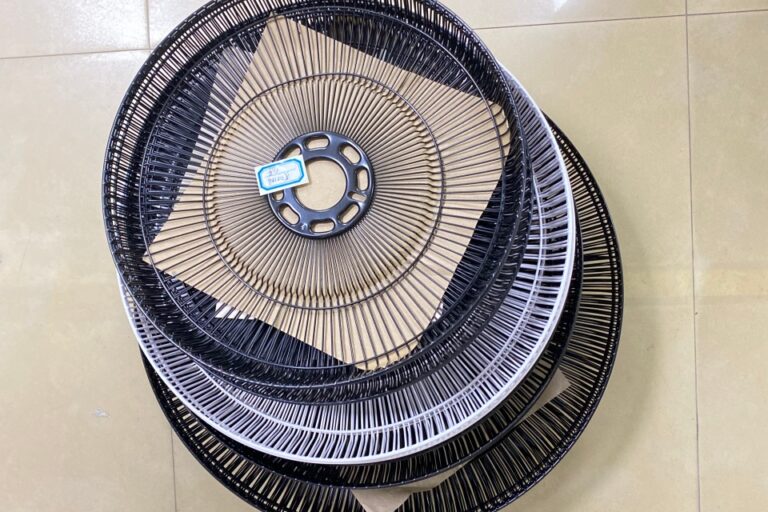
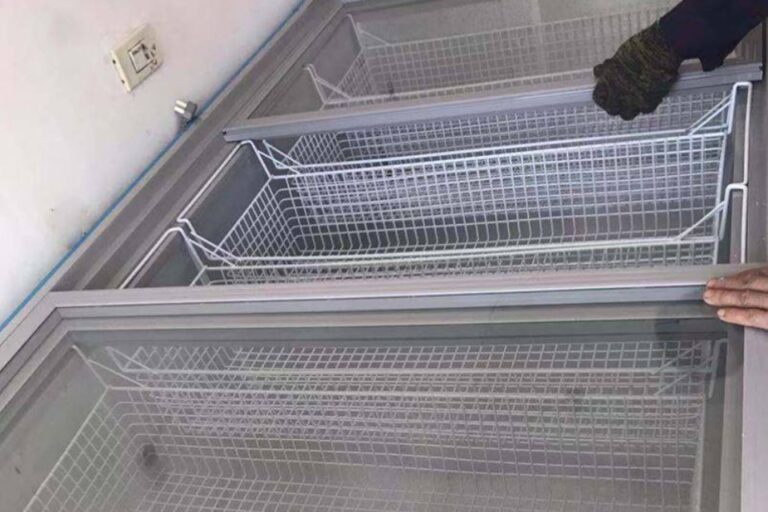
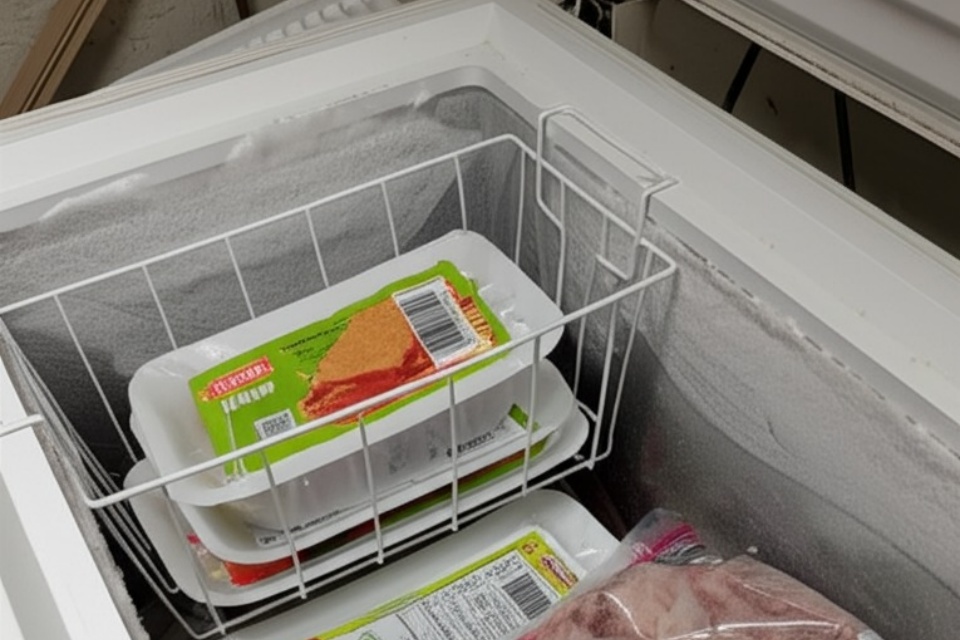
If you run refrigeration units, cold rooms, or test chambers, you’ll need solid physical parts that don’t rattle apart. That includes baskets, guards, and mesh that fit right the first time. Bad fit means vibration. Vibration means callbacks. It’s annoying.
OEM and ODM support for freezer components and wire products
This is the bridge to your site, and it’s a real one.
Two examples from your catalog that fit industrial use cases:
- Need custom parts for refrigeration and cold storage builds? Start with your 冷凍庫部品 page. Use it when you want baskets, racks, or supports that match the footprint you already have.
- Need protective wire mesh for airflow-sensitive equipment? Your コンプレッサー保護メッシュ is the kind of “small part” that prevents big headaches.
And yeah, sometimes the grammar in real factories isn’t perfect either. People say, “Just make it fit, ok?” But the work still has to be tight. So you keep drawings clean, revisions controlled, and communication fast. That’s how you avoid scrap and rework loops, even when the line is moving quick.
A simple OEM collaboration checklist you can steal
| Phase | What you align with OEMs | Proof you request | Common pain point |
|---|---|---|---|
| Concept | scope + ownership map | signed scope sheet | “not my problem” gaps |
| Engineering | interfaces + data plan | interface test report | handoff glitches |
| NPI | golden build + revision rules | golden run records | mystery drift after changes |
| Acceptance | FAT/SAT criteria | pass/fail checklist | vague promises |
| ランプ | OEE + downtime codes | weekly loss review | arguing instead of fixing |
Closing thought
OEM collaboration isn’t about being polite. It’s about being clear. You can still customize your SMT line. You just make the customization measurable, testable, and supported.
Do that, and your line won’t feel like a science project. It’ll feel like production. And that’s the whole point, right?