
You can run a pick-and-place line for months and feel like everything’s “fine.” Then one day the AOI starts yelling, offsets creep up, and your operators begin doing the worst kind of fix: tiny tweaks with no record.
That’s why calibration intervals matter. Not because calibration is fun (it isn’t). It matters because vision drift is sneaky. It shows up as small placement shifts, random fid misses, or feeder pick errors that come and go. And if you build products that must fit tight—like cold-storage assemblies, cabinet parts, or anything with repeatable hole patterns—those small shifts turn into big headaches.
I see the same mindset in fabrication too. If a jig moves 0.5 mm, your 와이어 랙 won’t sit square. If a camera-to-head mapping drifts a hair, your 0402 lands a hair off. Different shop, same pain.
목차
Why Calibration Intervals Matter In Pick-And-Place Vision Systems
If you set calibration “every 6 months” and never revisit it, you’re basically guessing. Some lines can survive that. Many can’t.
Here’s what usually changes your real interval:
- 제품 믹스 (01005 vs big passives, fine pitch vs chunky parts)
- 처리량 (higher speed = more vibration, more heat cycles)
- 환경 (dust, flux mist, humidity, temp swings)
- Hardware events (camera swap, lens touched, head crash, machine moved)
So the better question is: What risk can you accept, and how do you catch drift before it hits yield? That’s the whole game.
Pixel-To-Machine Coordinate Calibration
Your vision system doesn’t “see millimeters.” It sees pixels. Calibration turns pixels into machine coordinates, corrects distortion, and aligns the camera frame to the placement head and gantry.
When this mapping drifts, you’ll notice stuff like:
- Fiducials that used to lock fast now hesitate or fail
- Placement offsets slowly trend in one direction
- Good parts start looking “bad” on AOI even though paste and reflow didn’t change
Common Drift Drivers In Camera Calibration
- Slight camera bracket movement (yes, even “tight” screws)
- Temperature cycles that change geometry a little
- Lens contamination or haze (more on that below)
- After maintenance, someone touched a “do not touch” adjuster… and didn’t tell you
This is where a lot of teams get tricked. They blame the algorithm. But the real issue is the camera isn’t speaking the same coordinate language as the machine anymore.
Camera Lens Cleaning And Lighting Stability
Let’s be blunt: dirty optics make smart software look dumb.
Flux mist, dust, or a thin oily film can reduce contrast. Your vision match score drops, and the system starts guessing. That “guess” becomes placement variation. You’ll see it as random rejects or that annoying “it fails on night shift only” thing.
Practical Cleaning Routine That Actually Works
- Clean on a fixed rhythm (weekly is common on busy lines)
- Add a quick check at start of shift: lens looks clear, ring light looks even
- If your line runs sticky flux, increase frequency. Don’t argue with chemistry.
If you keep optics clean, you avoid false alarms. And you stop doing recalibration when you really needed a wipe. Sounds too simple, but it’s real.
Event-Triggered Recalibration After Machine Move Or Repair
Some events should force recalibration. No debate.
Recalibrate When These Happen
- You move the machine (even “just a little”)
- You replace or adjust camera, lens, light, bracket
- You do major work on head/gantry, or you had a crash
- You change anything that affects geometry, stiffness, or camera angle
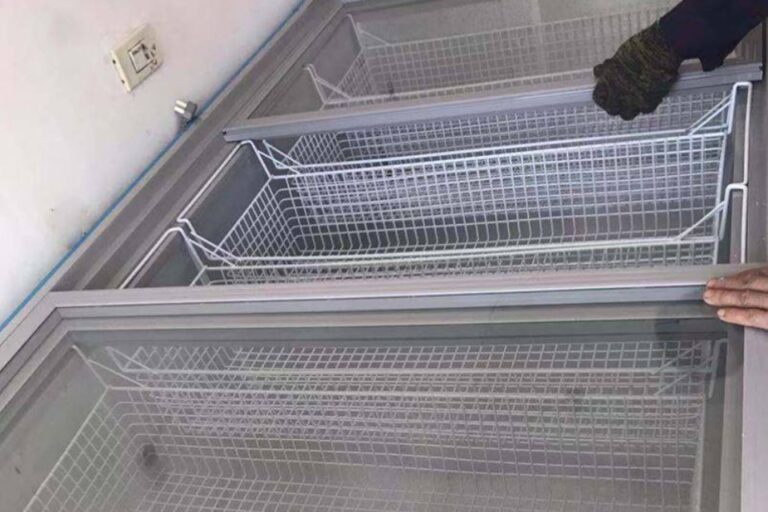
Think of it like installing a commercial refrigerator wire rack. If you moved the cabinet, you re-level it. You don’t wait six months and hope gravity stays polite.
Feeder Pick Position Calibration And Vision
Vision can be perfect and you still miss picks if feeder pickup position drifts or the tape path changes. This shows up as:
- Pickup failures that spike on specific feeders
- Parts rotated weird (especially small passives)
- Nozzle tries twice, then throws it to reject
A lot of techs call this “feeder hell.” It’s not always a bad feeder. Sometimes it’s just pickup alignment slowly wandering.
So your interval plan should include feeder-related verification, not only camera mapping. The machine is a system. Treat it like one.
A Simple Calibration Interval Framework You Can Run In Real Life
You don’t need a fancy textbook plan. You need a plan people will follow at 2 a.m.
Here’s a practical interval ladder you can adjust based on drift data and defects.
| 레벨 | What You Check | 목표 | Typical Interval / Trigger | What You’ll Notice If It’s Due |
|---|---|---|---|---|
| L0 Quick verify | Fid lock speed, match score trend, basic placement offset check | Catch drift early | Daily / each shift start | Fid search slower, offsets creeping |
| L1 Optics + lighting | Clean lens, check ring light, verify exposure consistency | Stop “fake drift” | Weekly (more if fluxy) | Random vision fails, noisy recognition |
| L2 Short calibration / validation | Run built-in checks, repeatability test, multi-point verify | Confirm mapping is stable | Monthly or when trend changes | AOI flags shift, repeatability worsens |
| L3 Full calibration + capability check | Full camera mapping + process verification | Reset the system baseline | 6–12 months (risk-based) | High scrap risk, frequent corrections |
| Event trigger | After move/repair/adjust | Avoid geometry surprises | Immediately after event | Sudden offset jump, weird new errors |
No, these intervals aren’t magic. You adjust them. The point is you stop guessing.
Using Drift Data Instead Of “Calendar Guessing”
If you already track placement offsets, fid fail rates, or AOI trends, you can set intervals with real evidence.
Easy Signals To Track
- Average placement correction per shift (and its direction)
- Fiducial acquisition time (getting slower is a hint)
- Vision match score distribution (more scatter = more noise)
- Feeder-related pickup failure rates per lane
When the trend starts moving, don’t wait for the next scheduled date. Pull the lever early. That’s cheaper than rework.
Real Shop Scenarios That Make This Click
Scenario 1: The “It Only Fails On One Product” Trap
You run big parts all week. Then you switch to fine-pitch QFN and suddenly your vision is “bad.” It wasn’t bad. It was drifting quietly, and the fine-pitch job exposed it. Tight jobs don’t forgive.
Scenario 2: The “We Cleaned It… Sort Of” Problem
Someone wipes the camera window with the wrong cloth. Now you’ve got haze. Vision starts missing fiducials in low contrast zones. Everybody blames the board fab. But the lens is just kinda smeared, you know?
Scenario 3: The “Moved The Line For Space” Move
You shift the machine to make room for a new cart or rack. The line runs, but offsets jump. That’s classic event-trigger recalibration territory.
Where Wire Shelving Manufacturing Fits In This Conversation
If you build cold-storage components and cabinet parts, you already live in the world of repeatability. A rack that’s out of square won’t seat right. A shelf that’s not level causes wobble and returns.
That’s why we think about calibration the same way we think about fixtures and tolerances in metalwork.
If you’re sourcing 와이어 선반 for refrigeration builds, you can check out 상업용 냉장고 와이어 선반 here:
https://wireshelvingmfg.com/commercial-refrigerator-wire-shelving/
And if you need a 상업용 냉장고 와이어 랙 setup for your cabinet layout, here’s the page:
https://wireshelvingmfg.com/commercial-refrigerator-wire-rack/
에서 QIAO, we do OEM/ODM wire shelving work for retail, warehouse, labs, and cold storage builds. If you bring a drawing, we can build to it. If you don’t have a drawing yet, we can help design it. That same “design + verify + repeat” mindset is exactly how your SMT line should treat vision calibration too.
Bottom Line: Pick A Baseline, Then Let The Line Teach You
Start with a sane interval ladder (daily verify, weekly optics, monthly validation). Add event triggers. Then watch drift signals and adjust.
Do that, and you’ll stop living in panic mode. Your line will run calmer. Your operators will trust the process more. And you’ll spend less time chasing ghosts.
Also, one last thing: write down what you changed. Even a messy note is better than nothing. Future you will thank you, trust me.