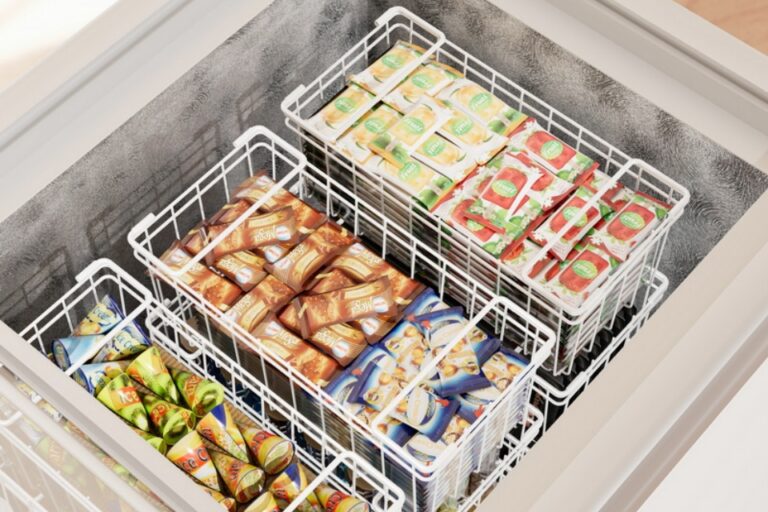

You build a nice prototype board. It runs okay in the lab.
Then the boss says: “Next month we need 1,000 sets for the new cold storage project.”
If you don’t plan the SMT line transition well, this jump hurts. You see tombstoning, random shorts, material chaos, late delivery… and your line techs want to quit.
Let’s walk through a practical way to move from prototype to real SMT mass production, using simple language and real shop-floor scenes. I’ll also connect it with cold-room hardware, because many customers use SMT boards inside freezers and on 냉장실 다층 와이어 선반.
Defining Product Mix and SMT Line Capacity
Before you talk about machines, you first need to decide 무엇 그리고 how much you want to build.
Ask yourself a few basic questions:
- Is this a single controller board or a whole family of boards?
- Are we talking hundreds per year또는 thousands per month?
- Do you expect many ECOs (engineering changes) in the first 6 months?
- Is the line “high-mix / low-volume” or “low-mix / high-volume”?
For example, a customer making cold storage control boxes may start with:
- 2–3 versions of the PCB (different I/O, same footprint)
- 200 pcs per month at the beginning
- Target later: 1,500 pcs per month when all supermarkets switch to the new system
If you don’t align this early, you can easily over-buy a monster chipshooter, or under-spec the line and then fight bottlenecks every day.
Key idea:
Prototype thinking is “can we make it once?”
Production thinking is “can we make it every day, same quality, same takt time?”.
Prototype vs NPI vs Mass Production SMT Line
You don’t jump from one engineer + one printer straight to a full auto line in one shot. A simple mental model is:
- Prototype build – engineering lab, low volume, many changes
- NPI / pilot SMT line – bridge between lab and mass production
- Full production SMT line – stable recipe, controlled process, clear metrics
Typical SMT Metrics by Phase
You can use rough ranges like this inside your factory discussions:
| Phase | Typical batch size | Changeover frequency | First Pass Yield (FPY) | Process control level |
|---|---|---|---|---|
| Prototype lab | 5–20 boards | Very often, every small rev | 80–90% is already okay | Manual tweaks, almost no SPC |
| NPI / pilot line | 50–200 boards | Often, but more planned | 90–95% target | Start using SPI/AOI data, basic SPC |
| Mass production line | 500+ boards per run | Planned changeover windows | ≥ 97–98% target | Full SPC, fixed recipes, clear alarms |
These are not strict rules, but they give you a language to talk with your team:
- “We are still in NPI mode, don’t expect 99% FPY yet.”
- “We want to move this cold-room controller to mass-production mode, so we must lock the recipe and stop random changes.”
DFM and DFT Reviews Before You Scale Up
A lot of pain in production actually comes from the PCB 설계, not from the SMT line itself.
Before you buy more machines, or freeze the layout, do a serious DFM/DFT review together with your EMS partner or in-house process engineer:
- Check pad sizes and footprints against real component data, not only CAD library.
- Make sure fine-pitch ICs have proper solder mask defined (no crazy slivers).
- Define clear test points for ICT / flying probe / functional test.
- 확인 minimum spacing, via-in-pad rules, stencil thickness, etc., match your real process capability.
On the shop floor, process guys will say things like:
“This BGA land pattern is killing us, paste slumps, and AOI can’t see hidden joints.”
If you fix that early in the design, your prototype-to-production transition is 10x smoother. If you ignore it, you fight the same joint every shift.

Locking the Process Window with SPI, AOI and Trial Builds
Once the PCB is DFM-clean, you need to lock the process window, not just “make it pass once”.
A practical way:
- Run 1–2 trial builds on your NPI line
- Maybe 50 pcs first, then 200 pcs
- Turn on SPI after printing and AOI after reflow
- Log basic metrics:
- Solder paste volume %
- Defect types (insufficient, bridge, tombstone, skew)
- FPY per lot
You don’t need super fancy data science. Even a simple spreadsheet with defect Pareto can tell you:
- Which footprint is the main troublemaker
- Which side of the board has more problems
- If the reflow profile is too cold / too hot for specific components
Imagine a cold-storage controller board for a big room, with relays, sensors, and a small MCU. During NPI you might see:
- Most defects on big two-pin relays (tombstoning, poor wetting)
- Slight voiding on high-current pads
- Almost no issues on 0402 passives
Then you adjust stencil design, reflow soak time, and maybe swap paste type. The goal is simple: when you go to full SMT production, operators run the recipe, not experiments.
BOM Stability, Material Readiness and Supply Chain
Another classic trap: prototype BOM and production BOM are not the same.
In the prototype build, you may use:
- Any resistor brand you can find on the shelf
- Alternate MOSFETs “just for test”
- A connector that is “ok for now”
When you go to mass production, this is dangerous. Lead time, last-time-buy, different parameter tails… all can bite you.
So before ramp-up:
- Freeze a production-intent BOM with approved manufacturers
- 정의 second source only when it is really tested
- Check lead times for key ICs, power devices, connectors
- Think about reel sizes and packaging, so feeders and magazines fit your SMT line
In real life, if a critical sensor for a freezer controller goes EOL right after your NPI run, you may lose 2–3 months just to re-qualify. That delay hurts more than any minor OEE drop.
Standardizing SMT Recipes, Work Instructions and Traceability
Prototype builds live in engineers’ heads. Production builds must live in documents and systems.
Before you call it “mass production”, make sure you have at least:
- A golden sample board, signed off by quality and customer
- Full work instructions (WI / SOP) for printing, placement, reflow and inspection
- Locked machine programs with version control
- Simple but real 추적 가능성 (board ID → lot → material batch → test result)
When your line runs 2–3 shifts, or you build the same freezer control board in two plants, you can’t rely on “老张的经验” only. You need:
- Same reflow recipe in both ovens
- Same stencil design on both sites
- Same AOI rule set and defect classification
This is boring work, but it’s what makes the difference between “we can build 50 now and then” and “we can ship 10,000 pcs every month without drama”.
Using Real Factory Scenes: Cold Storage and Wire Shelving
Why talk about wire shelving in an SMT topic? Because the end system matters.
Think of a large cold room:
- Controller PCBs, power boards, sensor modules
- All mounted inside boxes or panels
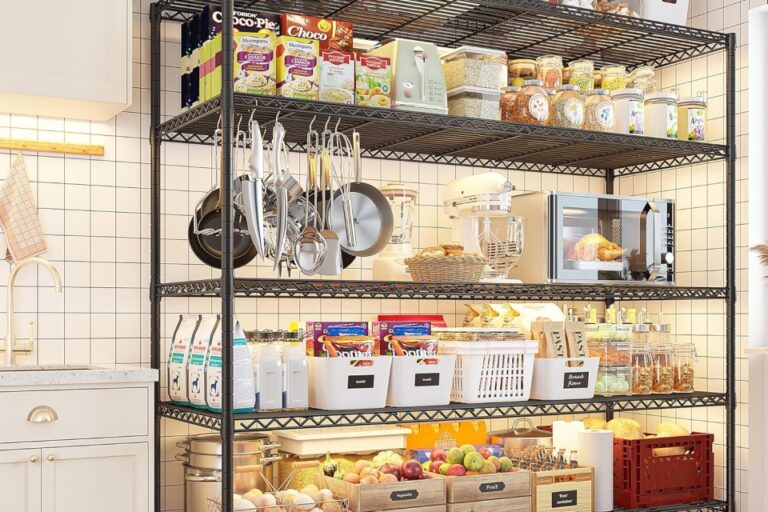
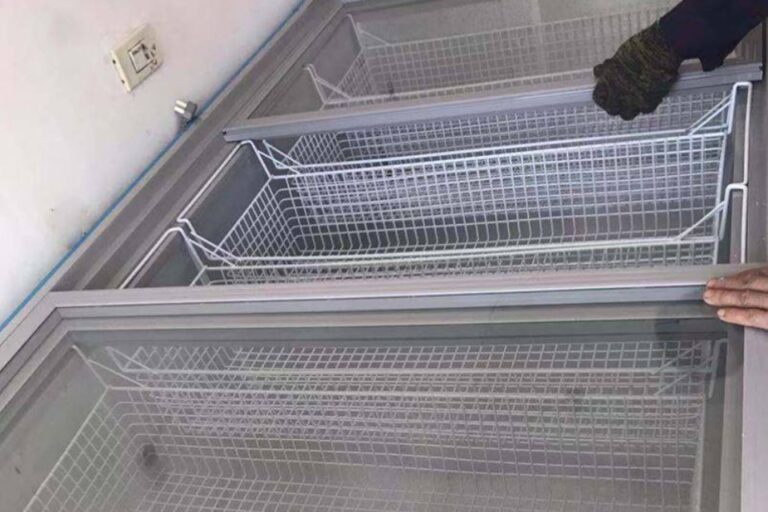
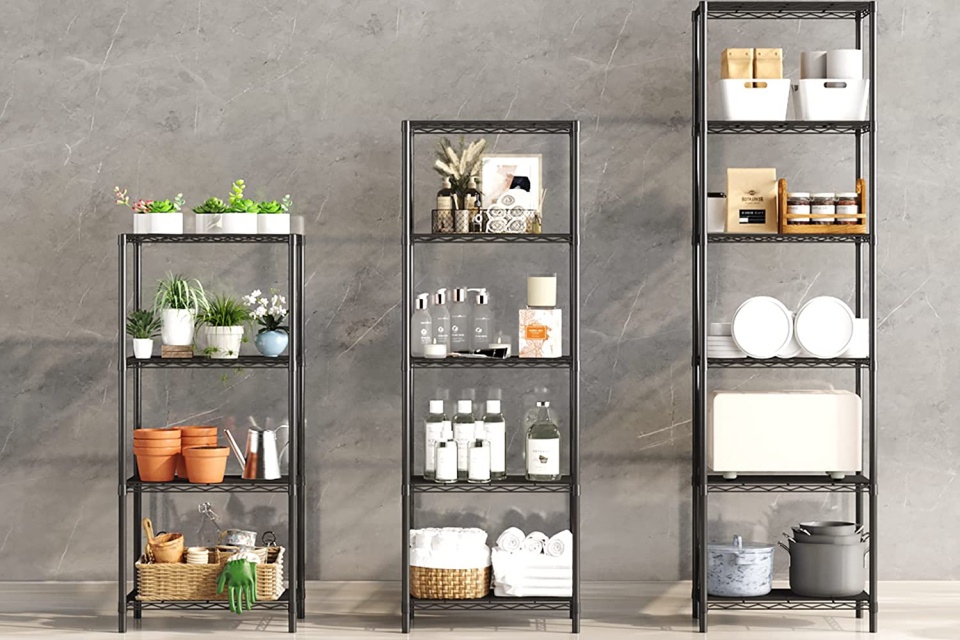
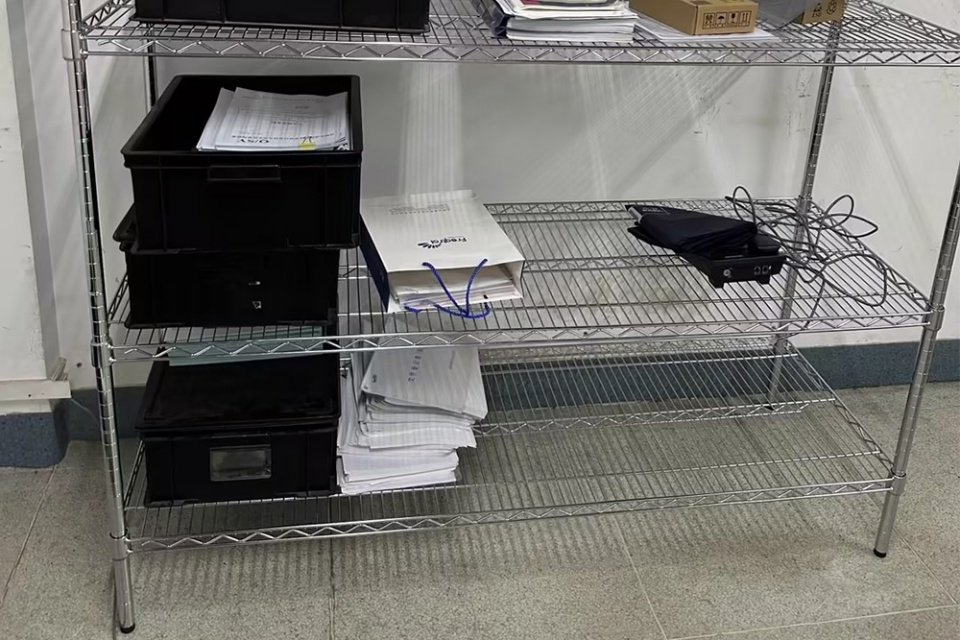
- Panels often sit on or next to 냉장실 다층 와이어 선반 for easy access, airflow and drainage
If you don’t plan the mechanical and layout side together with the electronics, you get funny problems later:
- Cables too short to reach the top shelf
- No space for extra sensor modules when customer asks for upgrade
- Poor airflow around power boards, leading to hot spots and random failures
Here is where QIAO comes in. QIAO doesn’t only supply SMT customers with custom 와이어 선반 그리고 냉장실 구성 요소. We can also talk about:
- How many controller boxes per bay you want
- How much loading each shelf needs to handle (tools, spares, data loggers)
- How to reserve space for future boards or extra modules
You bring your idea for the freezer line, QIAO can help design the multilayer shelving and brackets to hold those control panels in a clean, maintainable way. It’s the same mindset as the SMT line: don’t only think “can we install one sample?”, think “can we service and upgrade thousands of units over 5–10 years?”.
Partnering with QIAO for a Smoother SMT Line Transition
To wrap up, a good prototype-to-production SMT transition is not only about machines. It’s about:
- Clear product mix and capacity target
- Strong DFM/DFT before scale-up
- Data-driven trials with SPI/AOI
- Stable BOM and material plan
- Standardized recipes and traceability
- And a real look at the final system: cold rooms, shelving, wiring, service access
QIAO는 다음 사항에 중점을 둡니다. 맞춤형 와이어 선반 제조 서비스 그리고 상업용 냉장고 와이어 선반, plus other 냉장 장치 구성 요소, with full ODM / OEM support. When you plan your next SMT line for cold-storage electronics, you don’t need to fight alone.
You can let the SMT guys optimize the line, and let QIAO help you think about how those boards live in the real freezer enviroment — on strong, corrosion-resistant shelving that’s actually designed for your project, not just “whatever rack we find in warehouse”.
That’s how your prototype doesn’t just work in the lab.
It survives, and makes money, in the field.