
You can set every zone on your reflow oven “perfect.”
Then you run boards, and boom—cold joints, tombstones, or a random open that only shows up in the walk-in cooler.
That’s why thermal profiling matters. Not the setpoints. Not the “same recipe we used last year.”
You validate what the PCB and parts actually feel, not what the oven claims it did.
If you build electronics that end up near cold storage equipment—fan assemblies, refrigeration unit components, 후면 메시 sensor kits, or little control boards that live in a wet, cold room—you want stable solder joints. Small failures become big headache later.
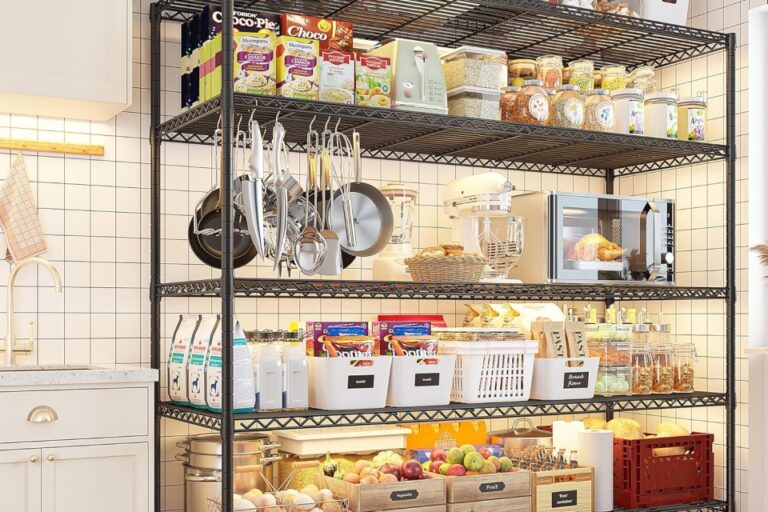
에서 wireshelvingmfg.com, we do OEM/ODM work. Sometimes you bring drawings, sometimes we help design. And when your build touches 냉장실 구성 요소 (like 냉장실 다층 와이어 선반 또는 워크인 냉장 와이어 선반), you usually care about reliability and repeatability, not drama.
Here are the profiling habits that keep reflow ovens honest, and keep your line calm.
- https://wireshelvingmfg.com/cold-storage-room-multilayer-wire-shelving/
- https://wireshelvingmfg.com/walk-in-refrigerated-wire-shelving/
목차
Thermal profiling for reflow oven validation
Thermal profiling means you attach thermocouples (TCs) to a real board, run it through the oven, and record the temperature curve over time.
That curve answers one question:
Did the board hit the process window your paste and components need?
If you don’t know the window, you can’t validate anything. You’re just watching a pretty graph.
What “validated” really means on the floor
A validated oven profile should let you say:
- “We meet the solder paste process window.”
- “We meet component temperature limits.”
- “We control ramp, soak, time above liquidus, and peak.”
- “We get repeatable results across lanes, shifts, and seasons.”
No magic. Just controlled heat.
Solder paste reflow profile window
Most people talk about four sections:
- Ramp / Preheat
- Soak
- Reflow / Time Above Liquidus (TAL)
- 냉각
You don’t “win” by chasing the highest peak. You win by hitting the window with margin.
Key profile parameters you should log every run
Here’s a practical checklist. Values below are typical industry ranges you’ll see on many paste datasheets and JEDEC-style guidance. Your paste and BOM may need different limits, so follow your own TDS and component rules.
| Parameter (what you measure) | Typical target range (common) | Why it matters (real talk) |
|---|---|---|
| Ramp rate (°C/sec) | ~0.5–3.0 °C/s | Too fast = thermal shock risk, spatter, tombstones |
| Soak temp band (°C) | ~150–200 °C (Pb-free often) | Helps equalize board temps, activates flux |
| Soak time (sec) | ~60-120 s | Too short = uneven heating; too long = dried flux |
| Liquidus temp (°C) | ~217 °C for many Pb-free alloys | The “melt line” for common SAC alloys |
| TAL (sec above liquidus) | ~60–150 s | Controls wetting, voiding trends, joint shape |
| Peak component temp (°C) | Often 235–260 °C max, BOM-dependent | Protects parts, stops scorched boards |
| Time near peak (sec) | ~20–40 s near peak | Too long can overcook flux, grow IMC too much |
| Cooling rate (°C/sec) | ~1–6 °C/s | Too slow can make grainy joints; too fast adds stress |
Keep this table in your profile record. Print it. Tape it near the oven. People forget fast.
Thermocouple placement on a PCB
Bad TC placement gives you bad decisions. That’s brutal because it “looks” scientific.
How many thermocouples you really need
For validation, you usually want at least 4 points, and 5–6 is better on mixed boards:
- Coldest spot (big copper, ground plane, heavy connector area)
- Hottest spot (small copper, edge, sparse area)
- A sensitive component (plastic package, connector, LED, etc.)
- A reference spot (center of board, common site)
- Optional: one on a large BTC/QFN pad area to watch TAL behavior
If you only use one TC, you don’t know your delta-T. And delta-T is where defects hide.
TC attachment tips that reduce “ghost problems”
- Use the same attachment method each time (same epoxy / same tape / same bead size).
- Keep the TC bead tight to the metal pad you care about. Loose bead = fake cooler reading.
- Don’t let the wire act like a heat sink. Route it clean, not dragging on conveyor rails.
This sounds small, but it saves hours. Seriously.
Conveyor speed and zone setpoints
Operators love tweaking zone temperatures. Engineers love tweaking conveyor speed.
Both can fix a profile, but they behave different.
A simple way to think about changes
- Change conveyor speed when the whole curve needs “more or less time.”
- Change zone setpoints when only one section needs correction (like soak too cold, or peak too high).
If your peak looks fine but TAL is short, speed changes often help.
If you overshoot peak on a thin board, a setpoint tweak in the last zones can calm it down.
Also, check lane-to-lane differences. Some ovens run hotter on one side. That’s real life.
Profile-driven defect troubleshooting
When defects show up, don’t argue for 30 minutes. Pull the profile and match symptoms.
| Defect (what you see) | Profile smell (common cause) | Fast adjustment (typical) |
|---|---|---|
| Tombstoning (01005/0201) | Ramp too aggressive, uneven heating | Slow ramp, improve soak stability |
| Head-in-pillow (BGA) | TAL too short, poor paste activation | Slightly longer TAL, better soak |
| Cold joints / dull fillets | Peak too low or TAL short | Add TAL time, modest peak increase |
| Solder balling | Ramp too fast, flux boil-off | Reduce ramp, smoother soak |
| Voids in BTC/QFN | Too much soak, bad outgassing timing | Tune soak + peak, watch TAL window |
| MLCC cracking (later failures) | Too fast ramp/cool, board stress | Reduce ramp, moderate cooling |
| Warpage-related opens | Too steep heating, uneven delta-T | Improve soak uniformity, reduce slope |
None of these fixes are “always.” But this table gives you a starting playbook.
And it keeps the team from guessing wildly.
Validation records you can actually use later
A profile isn’t a one-time ceremony. You want traceability.
What to save in a profile report
Save these items every time you validate:
- Oven model + recipe name (the “program”)
- Date, shift, operator (yes, it matters)
- Conveyor speed + zone setpoints
- Board revision + stencil thickness + paste lot (if available)
- TC locations (photo is best)
- Pass/fail vs your window (using the checklist table)
Real-world scenario: electronics that live near cold storage
Let’s say you build a small controller PCB for refrigeration units components.
It may sit in a cabinet near a walk-in refrigerated area. It sees condensation, vibration, and temperature cycling.
A “barely acceptable” reflow profile might pass AOI today.
Then it fails after weeks, and it looks random. It isn’t random. The profile likely ran hot on one corner, or TAL was short on a heavy copper zone, so wetting was marginal.
A simple validation routine that doesn’t waste your day
Baseline profiling for a new build (NPI)
- Run a “golden board” with 5–6 TCs
- Hit paste window and component limits
- Lock the recipe and record it
Ongoing checks in production
- Profile on schedule (weekly or monthly, depends on risk)
- Profile again after maintenance, belt change, or big product mix shift
- Profile when defects trend up, even if you “feel” the oven is fine
Do this, and your reflow oven stops being a mystery box.
Quick wrap-up
Thermal profiling is your truth meter.
It tells you if your oven recipe matches the real board behavior. It also turns arguments into data.
If you want stable builds—especially assemblies connected to refrigeration or cold storage environments—don’t skip validation. Save the records. Tune with intent. Keep the process boring. Boring is good.