
You can spend weeks arguing about brands. You can watch ten demos. You can still buy the “wrong” system for your line.
So let’s flip it.
If you want fewer escapes, less rework, and less line drama, you should compare problems, not logos. Then you match the tool to your real scenes: shiny parts, tight pitches, mixed models, rushed changeovers, and new operators at 2 a.m.
Below is a practical way to compare Koh Young vs Mirtec vs others (Viscom, Omron, Saki, Nordson, TRI, etc.). I’ll keep it simple and shop-floor friendly. I’ll also tie it back to how you run the area around inspection—because storage and flow matters more than people admit. That’s where Prateleiras de arame traseiras helps, and where QIAO can fit naturally.
Defect Coverage and Process Step: SPI vs AOI vs AXI
Before you compare any brand, ask one question:
What defect are you trying to catch, and when?
- SPI (Solder Paste Inspection) helps you stop defects early. You care about paste volume, height, area, and offset.
- AOI (Automated Optical Inspection) catches placement and solder appearance issues: missing parts, polarity, tombstoning, bridging, lifted lead, bad fillet, and so on.
- AXI / CT is for what optics can’t see (like inside BGA joints). Many factories don’t need it on every line. Some do.
If your pain is “bridges after reflow,” don’t over-weight SPI features. If your pain is “random opens on fine pitch,” you probably need strong SPI + process control, not just prettier AOI images.
Cena real: You run a mixed-model line. One product uses tiny passives. Another uses big connectors. Your defect list changes every hour. You need a system that stays stable across that mess.
3D Measurement Methods: Profilometry, Moiré, Structured Light
People say “3D” like it’s one thing. It isn’t.
Vendors use different 3D approaches. The method affects what you feel every day:
- How it handles shiny parts e glare
- How it sees side solder e tall parts
- How often you fight false calls (nuisance alarms)
Here’s the practical take:
- Some systems lean on 3D shape measurement to reduce “looks like a defect” noise.
- Some systems use Moiré / fringe patterns to measure height fast across a field.
- Some systems use multi-angle cameras to “peek” around leads and edges.
Cena real: Your board has metal shields and glossy IC tops. A basic 2D setup can panic. A stronger 3D/lighting strategy stays calmer. That calm saves you time, because you don’t keep re-checking good boards again and again.
Programming and Changeover: Offline Programming, CAD/Gerber, Libraries
In many factories, the biggest cost isn’t the machine. It’s the time you lose while you “teach” it.
So compare this first:
- Can you do offline programming while the line keeps running?
- Can you import CAD/Gerber data to speed setup?
- Do you get reusable component libraries that don’t fall apart?
If you run high-mix, this matters more than raw speed. Even if a machine is fast, it feels slow when you spend hours tuning windows, thresholds, and part definitions.
Cena real: You swap to a new PCB revision. Pads move a little. Silkscreen changes. Half your rules break. The best system is the one that gets you back to stable inspection with less babysitting.
Throughput, Resolution, and Field of View: Don’t Read One Number
Specs can trick you. Vendors might highlight one number that looks amazing, but it hides trade-offs.
When you compare brands, keep these three together:
- Rendimento (how much area per second it can scan)
- Resolution (how fine the pixel/measurement is)
- FOV (field of view per shot)
A wider FOV can reduce moves, which helps speed. A finer resolution can catch tiny issues, but it can slow the scan. You want a balance that matches your board density and takt time.
Also watch the “fine print” that never says fine print:
- speed may assume certain camera option
- speed may assume certain board coverage
- speed may ignore review station time (the human part)
Data Connectivity: Hermes, IPC-CFX, MES, Closed-Loop Feedback
Modern inspection isn’t just pass/fail. It’s data you can act on.
If you already use MES or plan to, compare:
- Can it speak Hermes and/or IPC-CFX cleanly?
- Can it send results fast enough for real decisions?
- Can it support closed-loop feedback (like paste printer adjustments from SPI trends)?
Cena real: Your line builds up small drift. Paste volume slowly drops. If SPI trends trigger a correction early, you avoid a pile of rework later. You don’t need magic. You need data flow that actually works on your floor.
Quick Comparison Table: What To Look At (Koh Young, Mirtec, Others)
Note: numbers vary by model and options, so use this as a decision guide, not a promise sheet.
| Comparison Lens | What You’re Really Testing | Koh Young (typical positioning) | Mirtec (typical positioning) | Others (Viscom / Omron / Saki / Nordson / TRI, etc.) |
|---|---|---|---|---|
| Defect focus | What defects it catches reliably | Strong 3D strategy, stable detection logic | Good 2D/3D options, often flexible for teams | Varies: some push speed, some push multi-angle, some push metrology |
| 3D method | How it measures height/shape | True 3D shape measurement focus | Moiré-style 3D in some lines | Structured light / multi-angle / reflection control (depends) |
| Lighting + glare control | How it behaves on shiny parts | Often strong here | Can be strong, depends config | Some brands really specialize in reflection suppression |
| Programming flow | Changeover speed in real life | CAD/Gerber driven workflows often emphasized | Usability varies by model/software package | Some have very strong offline programming tools |
| Speed vs detail | Does it meet takt time without losing sensitivity | Balanced approach | Can be very competitive in scan speed by model | Some are extremely fast, some are extremely detailed |
| Data integration | Hermes/CFX/MES readiness | Usually supports factory data approach | Often supported via options | TRI and others may emphasize smart factory standards strongly |
Where Rear Wire Shelving Helps Your SMT Inspection Area
People think inspection problems come from optics only. But many problems come from messy flow:
- wrong reel ends up at AOI review desk
- golden board sits in a drawer and gets scratched
- calibration artifacts get mixed with random tools
- operators waste time walking for fixtures, nozzles, feeders, labels
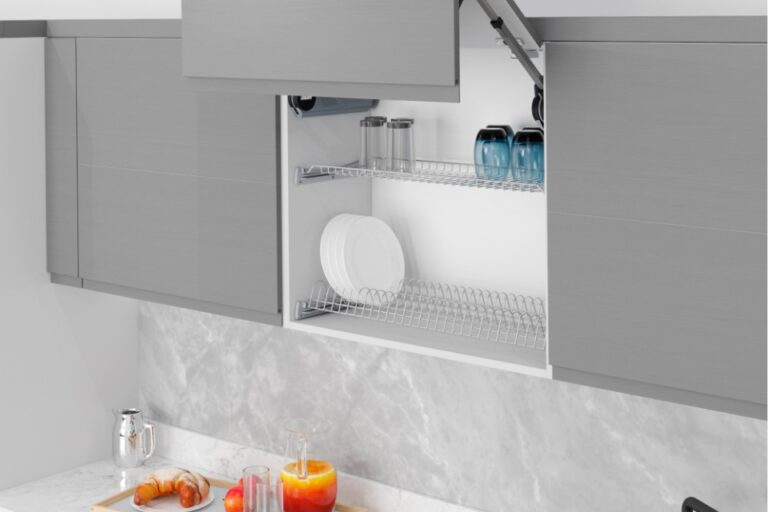
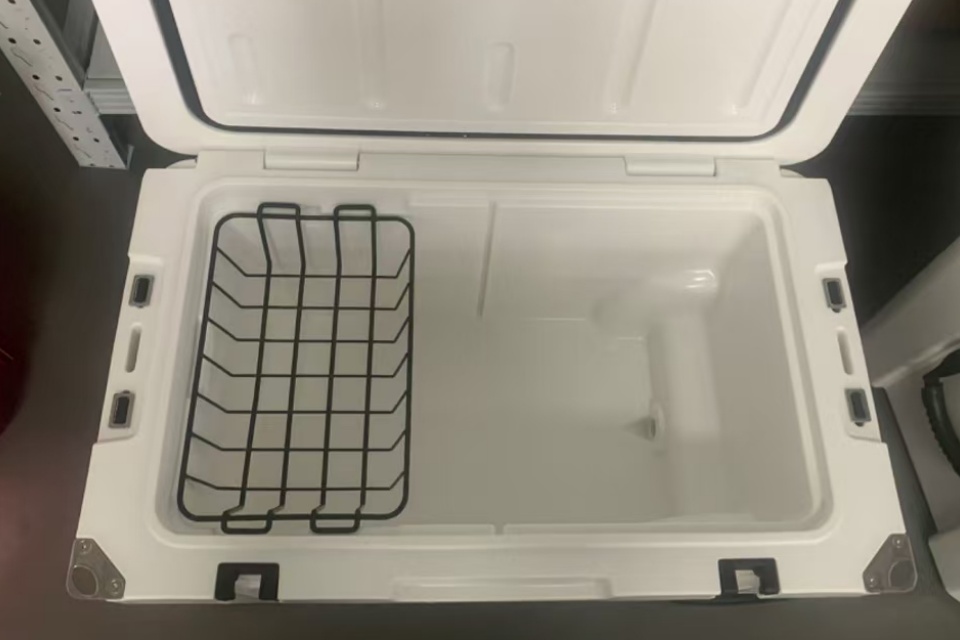
É por isso que Prateleiras de arame traseiras can quietly make inspection smoother.
Here’s how teams use it in real world:
- AOI/SPI “library wall”: labeled bins for golden boards, setup checklists, sample defect boards.
- Review station staging: trays for “Hold / Recheck / MRB” boards, so nothing disappears.
- Metrology corner: clean storage for calibration plates, gauge blocks, camera covers, and spare lenses.
- ESD-friendly organization: add mats, grounding points, and clear labeling zones (you set the rules).
If you run OEM/ODM work, you know every customer wants their own labeling and storage style. That’s why custom shelving matters. You can build the storage around the process, not the other way around.
At wireshelvingmfg.com, the point isn’t “a shelf.” The point is estantes metálicas personalizadas: you bring a layout, or we help design it. You pick corrosion-resistant finishes, build for labs or warehouse, and ship globally with ISO quality habits. That keeps your inspection zone clean and repeatable, even when production is chaotic.
I also like to say it plain: if your business sells Componentes do congelador e Produtos personalizados, your factory already lives in high-mix reality. Your inspection flow should match that reality, not fight it.
If you need custom malha traseira and rear wire shelving for the inspection area, QIAO can support OEM/ODM builds based on your drawings or your line layout.
A Simple Demo Script: How You Compare Brands Without Getting Fooled
Bring the same “pain boards” to every demo. Don’t bring easy boards only.
| Test | What You Bring | What You Measure |
|---|---|---|
| Shiny parts test | Board with shields, glossy ICs | False call rate and review time |
| Fine pitch test | Tight pitch QFP/QFN, small passives | Escapes, repeatability, re-check effort |
| Mixed model changeover | Two products with different rules | Setup time, library reuse, stability |
| Data test | A simple traceability need | Can you export results cleanly, fast |
| Operator test | New operator runs it | How many “gotcha” steps happen |
Don’t chase perfect slides. Chase less chaos on Monday morning.
Closing: Pick The System That Fits Your Line, Then Support It Like A System
Koh Young, Mirtec, and the other big names all make capable tools. The “best” one depends on your defect mix, your board surfaces, your changeover pace, and your data plan.
Do this and you’ll pick smarter:
- compare defect coverage by process step
- look hard at the 3D method and glare behavior
- treat programming and changeover like a first-class metric
- check data connectivity before you need it
- build a clean inspection area with the right storage flow (Rear Wire Shelving helps a lot)